Does mirtazapine cause hair loss?
What to discuss with your prescriber if you notice hair shedding while taking mirtazapine.

Published: 6 October 2026
Updated: 11 October 2026

Contents
- What mirtazapine is used for
- Can mirtazapine be responsible for hair shedding?
- How common is mirtazapine-related hair loss?
- What suspected side-effect reports can tell us
- Why hair changes can appear months after a trigger
- What telogen effluvium means
- Shedding, breakage and progressive thinning are different
- Could another medicine or supplement be involved?
- Nutrition, weight changes and recent illness
- What a GP or prescriber will need to know
- What examination and tests can clarify
- Why you should not stop mirtazapine suddenly
- What a medication review might lead to
- Does a higher dose prove a greater hair-loss risk?
- Will the hair grow back?
- How long should you wait before reviewing progress?
- What if the shedding continues?
- Should you try minoxidil or another hair-loss medicine?
- Are supplements a useful precaution?
- Caring for your hair while the cause is investigated
- What photographs can and cannot show
- Why a hair transplant is not the automatic next step
- When another antidepressant article is relevant
- Making a clear plan after the appointment
- Why an explanation of the mechanism is not proof
- Making sense of overlapping events
- Questions and answers
If you notice increased hair shedding after starting mirtazapine, speak to the clinician who prescribed it. The medicine is one possibility to discuss, but timing alone cannot establish the cause. Changes in health, nutrition, other treatments and the hair-growth cycle may also be relevant. Do not stop mirtazapine or change the dose yourself in response to hair loss.
The assessment should take both your hair loss and the condition being treated seriously. You can raise a possible side effect without choosing between your hair and your mental health. The prescriber can look at the pattern, consider other explanations and agree how to review it.
This guide covers what to record, what the evidence can tell you and which other causes may need checking. Finding the diagnosis before buying treatment can save disappointment.
What mirtazapine is used for
Mirtazapine is a prescription antidepressant. The UK product information describes its licensed use for episodes of major depression in adults. Your own prescriber can explain why it was chosen, what benefit is expected and how treatment will be reviewed.
Tell the prescriber what mirtazapine has helped with as well as what worries you. A photograph of thinning hair cannot show the medicine’s benefit for depression, but that benefit is not a reason to dismiss a possible side effect.
Use the medicine name and strength on the packet, or bring the packaging. Say whether you use ordinary tablets, an orodispersible form or liquid, and note any change in product or dose. The prescriber can decide which details matter.
Can mirtazapine be responsible for hair shedding?
Report a new symptom during treatment. The medicine may or may not be responsible; another possible explanation is a reason to investigate, not to dismiss your concern.
The prescriber needs the full sequence. When did treatment start, did the dose change and when did you notice shedding? Include illness, reduced eating, other new medicines and any thinning that started earlier. The most recent event is not always the cause.
The cause may become clear, or several explanations may remain possible. In either case, agree how to monitor the change. Neither a promise of regrowth after stopping nor a claim that the medicine cannot be involved is justified without evidence.
How common is mirtazapine-related hair loss?
Check the source of precise percentages quoted on commercial websites. A useful figure needs a named study, a defined patient group and a clear account of what was measured. Suspected side-effect reports, trials and online reviews provide different information.
Ask your prescriber or pharmacist to check the current information for your product. A leaflet’s side-effect frequency does not predict your personal risk. Equally, a short public information page leaving out a symptom does not settle what caused it.
Reading ten similar stories cannot tell you how often a problem occurs. Those accounts do not show how many people had no problem, how the diagnosis was made or what else was happening. They can suggest questions for your appointment, but cannot replace an examination and medication review.
What suspected side-effect reports can tell us
The MHRA Yellow Card scheme collects reports of suspected problems with medicines. You can discuss reporting with a pharmacist or prescriber. A suspected reaction does not need to have been proved before it is raised.
A safety report contributes information about a medicine. Your appointment looks at what is happening to you and what to do next. Reporting suspected hair loss does not itself prove that mirtazapine caused it.
If you report a concern, keep the description factual. Give the medicine name, when it was started, any dose changes, when the symptom appeared and what else was happening. Avoid translating an online explanation into a diagnosis that you have not been given. “I noticed more shedding after this change” is useful information in its own right.
Why hair changes can appear months after a trigger
Hair follicles do not all grow and shed at the same time. A change in the growth cycle can therefore become visible well after the event that started it. Looking only at what happened in the last few days may miss relevant parts of the history.
Our guide to how the hair-growth cycle works explains the difference between growing hair and hairs preparing to shed. Understanding that distinction helps explain why neither deterioration nor recovery can always be judged over a few washes.
Write a timeline covering the months before you first noticed shedding. If treatment began during an illness or a difficult period, include both. The clinician needs to consider overlapping events without assuming that one rules out another.
What telogen effluvium means
Telogen effluvium describes increased shedding associated with a disturbance of the usual hair cycle. It commonly affects the scalp broadly, rather than producing one sharply defined bald patch. It is a pattern of hair loss, not the name of a single cause.
The British Association of Dermatologists' patient information describes triggers including significant illness, major stress, marked weight loss and changes in medication. The clinical history and scalp examination help determine whether this pattern fits.
Our own article on telogen effluvium provides a fuller explanation of delayed shedding. If a clinician uses that term, ask what they believe triggered it and whether anything else is contributing. Knowing the label is helpful, but a useful plan also addresses the likely cause and the need for follow-up.
Shedding, breakage and progressive thinning are different
“Hair loss” can describe several experiences. You may see more full-length hairs in the shower, shorter broken pieces after styling, or gradual loss of coverage without a dramatic change in the brush. Those descriptions are not interchangeable.
Describe the change in your own words: a thinner ponytail, wider parting, receding temples, patches or less coverage across the scalp. Say whether your scalp feels comfortable. You do not need to inspect every strand before making an appointment.
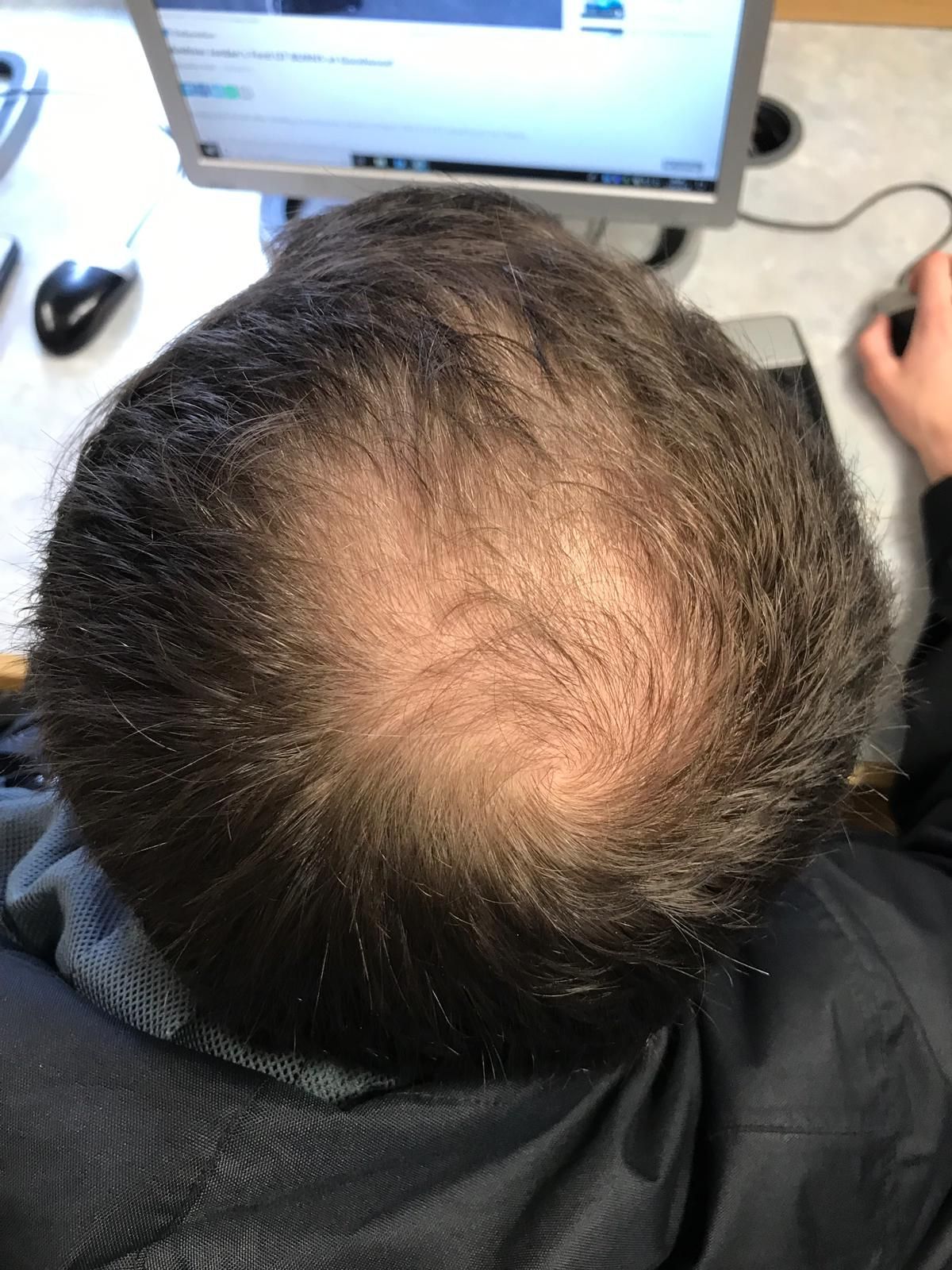
Photographs can record appearance, but they cannot establish the cause by themselves. Wet hair separates differently from dry hair, and a new haircut or stronger lighting can make the scalp more visible. Take a few comparable photographs if that helps, while allowing the examination to answer questions that pictures cannot.
Could another medicine or supplement be involved?
Bring a complete list of what you take. Include prescribed medicines, over-the-counter products, contraceptive or hormone treatments, supplements and any treatments bought online. A list limited to mirtazapine can hide other changes that the prescriber needs to consider.
Add start dates and changes where you can. Mention products you have taken for years as well as any begun together. This helps establish the sequence without deciding in advance which one caused the problem.
Do not stop other prescribed medicines as an experiment. Multiple unsupervised changes can affect your health and make the original question harder to resolve. A pharmacist can help check product names and ingredients if the list has become confusing, particularly when a supplement contains several substances behind one brand name.
Nutrition, weight changes and recent illness
Mention changes in appetite or eating habits, especially a restricted diet or substantial weight loss. These belong alongside the medicine history; they do not automatically rule out the medicine as a contributor.
Our guide to hair loss after weight loss explains why the timing of shedding may not match the timing of a diet or illness. If you have found eating difficult, say what that has meant in practice: missed meals, fewer food groups or a sustained change in weight.
Avoid buying a selection of high-dose supplements on the assumption that more nutrients must mean more hair. A suspected deficiency needs an appropriate assessment, and treatment should have a reason. Ask whether dietary support or targeted testing would be useful for your circumstances rather than requesting every available blood test.
What a GP or prescriber will need to know
Write a short history before the appointment: when mirtazapine was prescribed, when the hair changed, and any dose changes, illnesses, weight changes, other treatments or scalp symptoms.
Explain how the change affects you. You might be avoiding washing, worrying about work or repeatedly checking for loss. Tell the clinician even if the visible difference seems small during the appointment.
Bring previous test results if you have them, including the date and the reason they were requested. Do not assume that a test performed years ago rules out a current problem. Equally, an old result should not automatically lead to repeating the same investigation without considering what has changed.
What examination and tests can clarify
The scalp examination helps distinguish the pattern of loss and look for features that need a different approach. Depending on the findings, the clinician may consider whether blood tests or a dermatology assessment are appropriate.
Ask what each proposed test is looking for and how its result would affect the plan. Tests are most useful when there is a particular question to answer. A blood test alone will not usually prove that a medicine caused the loss.
The examination may reveal more than one type of loss. Extra shedding can make existing thinning more noticeable. If both are present, ask what may recover over time and what needs a separate treatment discussion.
Why you should not stop mirtazapine suddenly
The NHS mirtazapine guidance advises speaking to your doctor before stopping and explains that abrupt withdrawal can cause symptoms. Any reduction should follow the plan agreed with the prescriber.
Do not create your own trial by missing tablets, alternating doses or restarting after a gap. Apart from the potential effect on your mental health, a short stop-start experiment is unlikely to provide a reliable answer about a hair cycle that changes over a much longer period.
If hair loss is making you reluctant to continue mirtazapine, contact the prescriber promptly. Explain the difficulty before changing treatment yourself. Ask where to get advice if you cannot arrange an appointment before your next review.
What a medication review might lead to
A review does not automatically mean changing the medicine. The prescriber may recommend continuing while investigating another explanation, monitoring the hair change, adjusting treatment or considering an alternative. The appropriate choice depends on the clinical assessment and the benefits you are receiving.
Ask the prescriber to explain their reasoning. How likely is the medicine to be involved, and what would help clarify that? What risks would a change carry? If you prefer to continue for now, how will the hair concern be followed up?
If an alternative is discussed, ask how the transition would be managed and who will review it. Hair concerns should be part of the decision, but no online comparison can identify the best antidepressant for an individual. Previous responses to treatment, other conditions and your preferences also need to be considered.
Does a higher dose prove a greater hair-loss risk?
Record a dose change, but do not treat it as proof of a side effect. The reason for the change may coincide with changes in your health, symptoms or routine. Your prescriber needs that sequence to assess what happened.
For the same reason, do not compare your dose with a stranger's and conclude that their experience predicts yours. They may have a different diagnosis, treatment history, hair-loss pattern or combination of medicines. Dose is one detail in the assessment, not a substitute for it.
Be wary of articles that give a precise dose threshold for shedding without linking to evidence that actually measures that outcome. A pharmacological explanation of how mirtazapine treats depression is not, on its own, evidence that it causes a particular scalp change at a particular dose.
Will the hair grow back?
Regrowth depends on the diagnosis and whether the follicles can still produce hair. Temporary shedding and scarring loss have different outlooks, so complete regrowth should not be promised before examining the scalp.
If the clinician believes a temporary shedding process is responsible, ask what would count as recovery. Less shedding, short new hairs and improved overall coverage are different observations and may become apparent at different stages. Long hair also needs time to regain its previous length, even after the shedding settles.
If a separate inherited pattern is present, its appearance may not reverse simply because a temporary trigger has been addressed. That does not mean the original assessment was necessarily wrong. It means two processes may need to be followed separately, with a clear explanation of what each part of the plan is intended to achieve.
How long should you wait before reviewing progress?
Agree when to review progress with the clinician. The interval depends on the diagnosis, how long the problem has lasted and any treatment being changed or investigated. Another person’s regrowth date cannot give you a reliable deadline.
At the review, compare the same things you recorded initially: the pattern, scalp symptoms, day-to-day shedding and the effect on your wellbeing. If blood tests or a medicine change formed part of the plan, check who is responsible for reviewing those results. Do not assume that a request for tests automatically creates a follow-up appointment.
Seek earlier advice if the picture changes substantially. New bald patches, increasing scalp pain or a different pattern of loss should not be ignored simply because the original plan was to wait. A monitoring plan should explain when waiting is reasonable and when to contact the clinician sooner.
What if the shedding continues?
If shedding continues, ask for the diagnosis and history to be reviewed. Persistent shedding does not by itself prove permanent damage or a need for transplantation. Explain whether it is steady, fluctuating or increasing.
Consider whether the circumstances have also changed. Has nutrition improved? Have there been further illnesses? Did a prescribed treatment actually begin, and was it taken as planned? Have new scalp symptoms appeared? A follow-up based only on “it is still happening” may miss a useful explanation for why the original expectation has not been met.
Ask whether a dermatology opinion would now help. The purpose of specialist review is to clarify the type of hair loss and an appropriate plan, not simply to obtain a stronger product. Bring the earlier assessment and results so the next clinician can build on them rather than starting without context.
Should you try minoxidil or another hair-loss medicine?
A treatment advertised for thinning hair is not automatically appropriate for shedding that began during antidepressant treatment. Medicines have different indications, precautions and monitoring requirements. The cause of the hair loss should guide the choice.
Our minoxidil guide explains why formulation, suitability and expectations need discussion. If a clinician recommends it, ask which part of your diagnosis it is intended to treat and how success will be assessed. Do not assume that adding a hair-loss medicine removes the need to review the original concern.
Starting several products together makes progress harder to judge. Irritation may be difficult to trace, and improvement could reflect recovery, treatment or different photographs. Agree a manageable plan with a clear reason for each product.
Are supplements a useful precaution?
A hair supplement should not be used as insurance against an unconfirmed medicine side effect. The relevant question is whether you have a dietary need or deficiency that warrants treatment. Packaging aimed at “hair, skin and nails” does not answer that question.
Take the ingredient list to a pharmacist if you already use one. Different brands can contain overlapping ingredients, and the daily amount can increase when several products are combined. Include powders, gummies and drinks, not just tablets that look like medicines.
Tell the clinician if eating is difficult and explain why. Poor appetite, food costs and avoiding many foods may call for different support. A supplement cannot replace regular nutrition or explain every hair change.
Caring for your hair while the cause is investigated
Choose a routine that keeps the scalp comfortable and avoids unnecessary pulling or repeated heat damage. Treat tangles gently and avoid making every wash a test of whether the situation is improving. Washing can make shed hairs visible without showing what triggered the shedding.
Mention any product that stings or leaves your scalp sore. Record treatment changes instead of adding more products whenever you are worried. A simple routine is easier to maintain and review.
A different parting, shorter cut, head covering or suitable camouflage may help you feel more comfortable during investigations. These choices do not mean you have given up on treatment; they help with appearance while the medical questions are being answered.
What photographs can and cannot show
A photograph records appearance at a moment in time. It may help document a changing parting or hairline, but it cannot establish the diagnosis, measure every follicle or identify which medicine was responsible.
Keep lighting, angle, hairstyle and wet or dry hair conditions similar between photographs. An old professionally styled picture and a bathroom close-up will be difficult to compare. Date the images and bring a small representative selection to the appointment.
If taking photographs turns into repeated checking throughout the day, mention that to the clinician. It can add to the worry. Planned comparisons at agreed intervals are more useful than searching constantly for tiny changes an image cannot reliably show.
Why a hair transplant is not the automatic next step
Hair transplantation moves existing follicles from a donor area to a selected recipient area. It does not diagnose or remove the cause of widespread shedding. An early conversation about surgery should therefore begin with whether surgery is appropriate at all.
The NHS hair transplant overview explains the procedure and its limitations. A person with an unresolved scalp condition or an unclear pattern of loss needs those questions addressed before any graft number or date is discussed.
If a transplant is considered later for a separate, suitable pattern of permanent hair loss, ask how the donor supply and future thinning have been assessed. A quotation should follow a clinical plan. It should not be presented as a remedy for a possible antidepressant side effect simply because the shedding is distressing.
When another antidepressant article is relevant
People often search for several medicine names while considering alternatives. Our sertraline and hair-loss article discusses similar questions about timing, possible causes and prescriber review.
It should not be read as a recommendation to switch from one drug to another. A list of possible adverse effects cannot rank the best treatment for your depression. Medicines may differ in ways that matter more to your health than an unverified comparison of online hair-loss reports.
Before asking about another medicine, write down what you hope changing would achieve and what concerns you about the current treatment. That gives your prescriber more to work with than rankings based on negative online reviews.
Making a clear plan after the appointment
Before leaving the appointment, check that you understand the next step. You may be continuing treatment while awaiting results, coming back for review or following a change agreed with your prescriber. Ask for any unclear instructions to be explained.
Write down who will contact you about results and what to do if you hear nothing. If more than one clinician is involved, clarify who is responsible for the medication decision and who is assessing the scalp. A hair consultation should not leave you uncertain about whether to follow your existing prescription.
Keep the plan with your medicine list. It will help if you seek another opinion, showing what has already been considered and avoiding repeated work. It is also easier to refer to than recalling several separate conversations.
Why an explanation of the mechanism is not proof
An article may describe receptors, hormones or blood flow and then claim that this explains exactly why mirtazapine causes hair loss. A plausible biological story is not the same as evidence that the effect occurs at a particular frequency in patients taking the medicine.
There are several separate questions: can a substance affect a process in laboratory conditions, does it change hair outcomes in people, and is it responsible for the change in one particular person? Evidence answering the first question does not automatically answer the other two.
A confident online explanation can make an unproven link sound settled. That may encourage you to abandon helpful treatment or overlook another condition needing assessment.
Ask what evidence supports a strong claim: was hair loss measured, how was it defined, and were other explanations considered? You do not need to become a researcher to question wording that sounds more certain than the evidence allows.
Making sense of overlapping events
Consider a hypothetical timeline: someone experiences a prolonged illness, eats less than usual, starts mirtazapine and notices shedding several months later. All of those events belong in the history. The most recent prescription is easier to name than a gradual change in appetite, but that does not make it the established cause.
A second hypothetical timeline might involve gradual crown thinning for several years, followed by a noticeable increase in shedding after treatment begins. The visible change could include an existing pattern as well as a newer process. Restoring the recent loss would not necessarily return the hair to its appearance years earlier.
These are examples of how to organise information, not diagnoses or accounts of clinic patients. Their value is in showing why a single before-and-after comparison can be incomplete. The clinician needs to know what the hair was doing before the medicine, not only what happened afterwards.
When preparing your own timeline, separate observations from interpretations. Write “I began seeing more strands in September” rather than “the medicine damaged my follicles in September”. Add what you know about earlier photographs, scalp symptoms, medicines and health changes, while leaving uncertain dates clearly marked as approximate.
Record any treatments changed at the same time. You may be pleased with improvement without knowing exactly what caused it. A review can acknowledge that uncertainty while deciding whether the plan is helping and whether further checks are needed.
Questions and answers
Should I stop mirtazapine when I notice extra hair in the shower?
No. Contact your prescriber about the change and continue to follow the instructions you have been given unless a clinician advises otherwise. Suddenly stopping or changing an antidepressant can cause problems. Hair shedding needs assessment, and its timing does not make an unsupervised medication change a safe diagnostic test.
Does shedding after a dose increase mean the dose is too high?
Not necessarily. Record when the increase happened and when shedding became noticeable, but let the prescriber interpret the sequence alongside the rest of your history. Do not lower the dose yourself. There may be other explanations, and the dose also needs to be appropriate for the condition being treated.
Can depression or stress be relevant even if I suspect the medicine?
Yes, the wider health history matters. That does not mean a medicine concern should be dismissed as “just stress”. The useful question is whether the pattern, timing and examination support one explanation or several. Ask the clinician to explain that reasoning rather than relying on a single label.
Do normal blood tests rule out every type of hair loss?
No. Blood tests answer particular questions; they do not replace looking at the scalp and taking a history. Ask which conditions the tests were intended to investigate and whether the examination suggests another explanation. Do not interpret “normal results” as proof that the symptom is imaginary or must be caused by the medicine.
Will changing antidepressants guarantee regrowth?
No. It depends on whether the medicine was actually contributing and whether another cause is present. Any change must be planned with the prescriber, considering mental health as well as hair. Ask how progress will be reviewed and what the next step would be if the hair concern continues.
Should I ask for a full set of vitamin tests?
Ask which tests are justified by your history, diet, symptoms and examination. A broad panel is not automatically better, and one abnormal result does not necessarily explain all the hair loss. The important part is having someone interpret the results and explain what, if anything, needs treatment.
What if my hair looks thinner but I am not shedding much?
Visible thinning and obvious shedding are not identical. Tell the clinician which areas are changing and whether the change has been gradual. Bring comparable photographs if available. A different pattern may need a different assessment from a sudden increase in hair found during washing or brushing.
Can a consultation help without committing me to treatment?
Yes. The purpose of an assessment is to understand the concern and discuss appropriate next steps. If a medical or medication issue needs review first, that should be made clear. You can request a London consultation to discuss your hair-loss pattern while keeping medication decisions with the prescriber responsible for your care.
What should I do if I have other symptoms as well?
Tell the prescriber about them rather than focusing only on the hair. Mention changes in mood, physical health, appetite or scalp symptoms, including when they began. If you feel acutely unwell or have a severe reaction, seek urgent medical advice instead of waiting for a routine hair appointment.
How do I know whether the plan is helping?
Agree what you are monitoring and when it will be reviewed. Scalp comfort, shedding, photographs and any relevant test results provide different information. A useful review considers them together. If the original explanation no longer fits, ask for it to be reconsidered rather than repeatedly buying new products without a diagnosis.