Jack P. Shepherd’s hair transplant: what is confirmed?
His publicly documented treatment offers a useful starting point for discussing hairlines, recovery and repeat procedures.


Crown Clinic has published an account of treating Coronation Street actor Jack P. Shepherd with FUE.
The documented treatment
Crown Clinic's case study describes an operation during the programme's Christmas break in 2018, performed by Dr Asim Shahmalak. It reports that more than 3,000 hairs were placed around the front and temples. That is a hair count, not a graft count: a graft can contain more than one hair.
In June 2026, The Independent reported a third procedure, following Shepherd's appearance on the On The Sofa podcast. An early appearance after an operation cannot show the eventual growth result.
A published case account supports the details it actually gives. It does not provide a complete medical record, a transferable price or a reason to recommend the same treatment to another person.
Why an early photograph is easy to misread
Immediately after transplantation, visible short hairs, small crusts and redness can make the treated area look quite different from its later appearance. A shaved scalp also changes how a hairline looks on camera. Lighting, styling and the angle of the photograph affect comparisons further.
Later photographs help only when you know when and how they were taken. Ask for examples with similar lighting, hair length and angles, including the donor area as well as the front. A selected photograph cannot show every benefit or complication.
Why someone might have another transplant
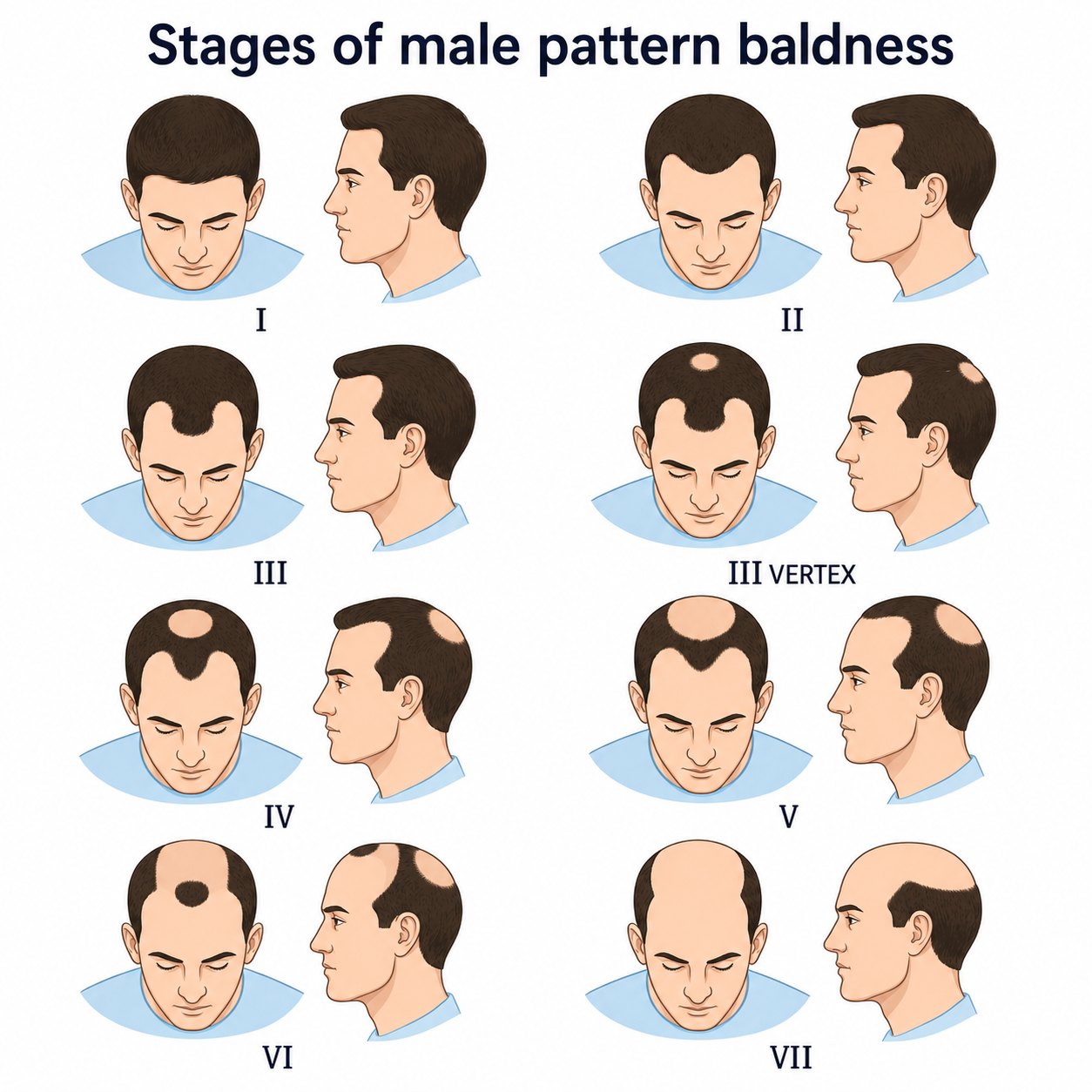
A transplant moves hair into selected areas. It does not stop all future loss of the surrounding native hair. A later procedure may therefore be considered to address another area, improve coverage or revise an earlier result. Which explanation applies to an individual cannot be assumed from the number of operations they have had.
The donor area is finite. Before a repeat procedure, the surgeon needs to assess what remains, how it healed and whether further extraction would leave visible thinning. A larger graft number is not automatically a better plan.
What a reader can take to a consultation
If the front of your hairline concerns you, explain how you wear your hair and what you want to change. Bring older photographs if you have them. Ask the surgeon to show you the proposed hairline and explain how it would look if the hair behind it continued to thin.
Be clear about work and other commitments. Someone working on television may face different practical pressures from someone who wears protective headgear. Advice on returning to work, exercise and styling needs to fit your procedure and recovery.
Our guide to preparing for surgery and aftercare sets out the questions to ask before booking. A celebrity's experience is not a personal recovery timetable.
Questions and answers
Was Jack P. Shepherd treated by this clinic?
Crown Clinic's published case study names Dr Asim Shahmalak as the treating surgeon.
Do three transplants mean the first one failed?
Not necessarily. Further native hair loss or a decision to treat another area can lead to additional surgery. Only the treating team and patient can explain an individual sequence of procedures.
Could I have the same hairline?
A hairline must fit your facial proportions, available donor hair and likely future loss. A photograph can help explain your preferences, but it cannot establish what is achievable for you.