VDPHL01: what the “86%” hair-loss trial result means
The headline describes the proportion of patients reporting improvement, not an 86% increase in hair coverage.


The “86%” figure in reports about VDPHL01 does not mean that a new pill increased hair coverage by 86%. It means that 86% of participants in one treatment group reported some improvement. Understanding that distinction changes what the result can tell someone considering treatment.
What was studied?
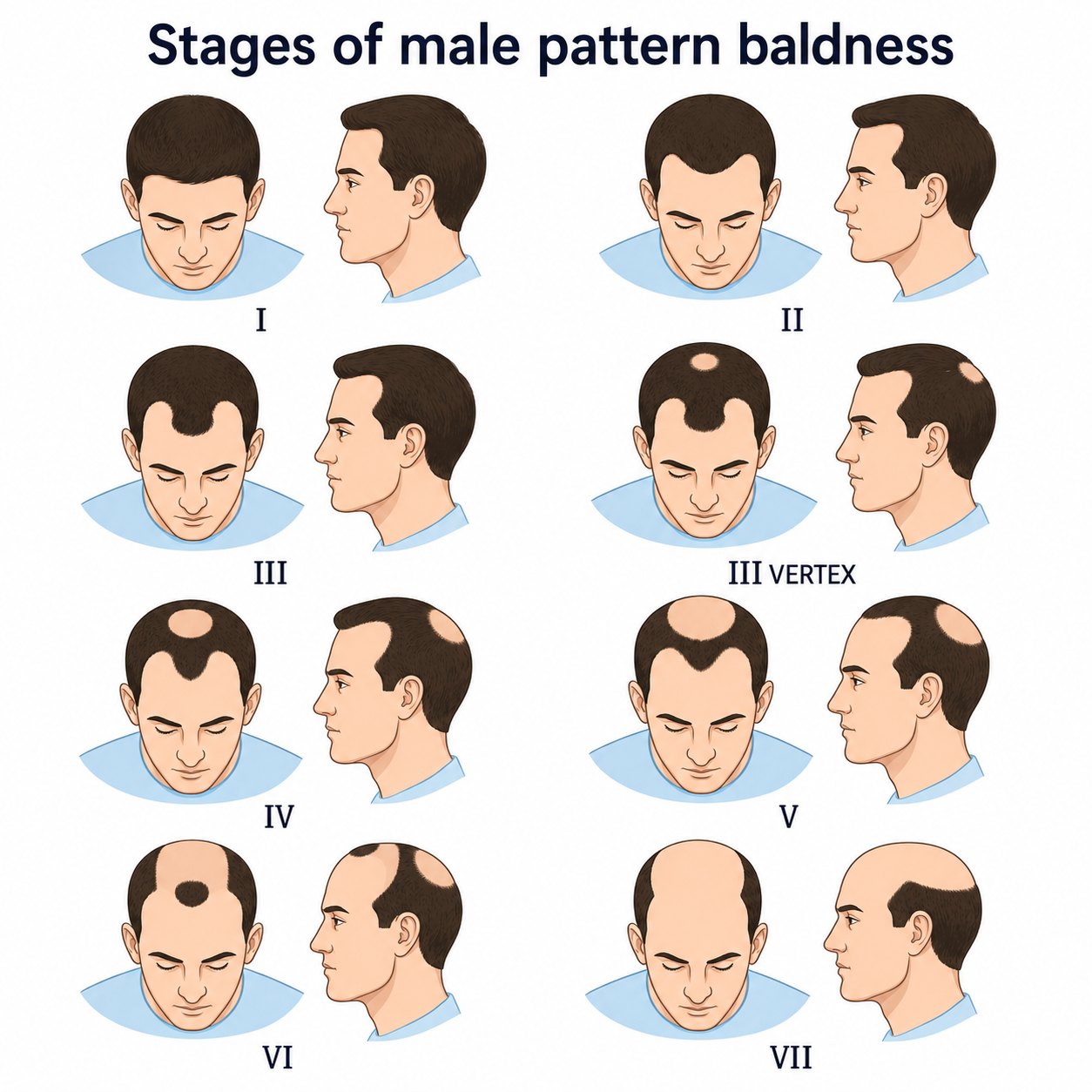
VDPHL01 is an investigational extended-release formulation of oral minoxidil. In its 27 April 2026 announcement, developer Veradermics reported six-month findings from a placebo-controlled trial involving 519 men with mild-to-moderate pattern hair loss.
The company reported that 86.0% of the twice-daily group described some improvement in coverage, compared with 35.6% of the placebo group. The stricter categories of “improved” or “much improved” were reported by 62.9% and 13.4%, respectively. These were patient-reported ratings, not percentages of lost hair restored.
The same announcement reported average increases in measured non-vellus hair count of 33.0 hairs per square centimetre in the twice-daily group and 7.3 with placebo. These findings concern a measured target area. They do not mean that a whole scalp changed by the same percentage.
Why the way results are measured matters
Hair counts and patient ratings measure different things. A count can record a biological change, while a rating describes how noticeable that change feels to the patient. Neither can predict exactly how your hairline would look.
A useful report should identify the treatment, comparison group, study population, duration and outcome measured. If a headline gives only a large percentage, find its denominator: percentage of people, percentage change from baseline or percentage difference from another treatment? Those are not interchangeable.
What still needs to be established
These are sponsor-reported trial findings. Longer follow-up, the full study methods and wider safety evidence matter when judging a medicine. A favourable six-month safety report cannot establish that a treatment is free from rare or longer-term adverse effects.
The developer's clinical trials page describes its research programme. An investigational product should not be presented as a routine UK treatment on the strength of an announcement. UK licensing, availability, price and a launch date have not been established by the announcement.
Is this the same as taking ordinary minoxidil tablets?
No. Formulation affects how a medicine is released and absorbed. Trial doses for an extended-release product cannot be copied using a different preparation. Do not alter prescribed tablets or combine products to recreate a research regimen.
Topical minoxidil and clinician-prescribed oral minoxidil also have different considerations. Our minoxidil guide explains the distinction, including why oral treatment requires medical assessment. A pharmacist or prescriber should check the specific product and your medical history.
What does it mean for someone deciding about a transplant?
A medication study is not a direct comparison with surgery. Medication aims to influence existing follicles; a transplant redistributes suitable donor follicles. The appropriate choice depends on the diagnosis, current coverage, future loss and the amount of donor hair available.
If your hair is thinning now, you can seek advice about the options currently available. A news headline is not a reason to rush into surgery, or to postpone medical advice while waiting for a medicine still under investigation.
Questions and answers
Did the trial show 86% more hair?
No. The figure describes participants reporting some improvement in one treatment group. It is not a measure of the percentage of hair restored.
Does the result apply to every cause of hair loss?
No. This reported trial studied men with pattern hair loss. It cannot establish treatment effectiveness for postpartum shedding, alopecia areata or scarring alopecia.
Can I copy the study dose with ordinary minoxidil?
No. The research formulation and prescribing context matter. Discuss treatment with a qualified prescriber rather than using a trial announcement as dosing advice.