
Hairline surgery for a widow’s peak
- Approach: Surgeon-Performed
- Surgeon: Dr Harpreet Kalra
- Finance available, subject to eligibility
Contents [show] [hide]
- Keep the point or soften the outline?
- Look at your older photographs
- How much change do you want?
- Hairline photographs at follow-up
- A natural point or a change at the temples?
- Three different aims for the same V shape
- Planning and carrying out FUE around a peak
- Photographs, aftercare and cost
- Questions about widow’s peak surgery
- Dr Harpreet Kalra
- Share This
A widow’s peak is the point where the centre of the hairline dips towards the forehead. If you have always had one and like it, you can keep it. If it seems more pronounced than it used to, it is worth checking whether hair has receded at the sides.
Keep the point or soften the outline?
Adding hair beside the point can soften the V shape. Leaving the point alone and treating a thinning temple gives a different outline. If your aim is to move the point higher, say so at the outset. Adding hair cannot raise an existing hairline.
Look at your older photographs
Compare a front-facing photograph from a few years ago with one from today, with your hair lifted away from your forehead. Look at the corners as well as the point. Bring both images if you see a change. They can help the surgeon distinguish your usual outline from newer recession.
How much change do you want?
Ask to see the smallest adjustment that would address your concern and how it would look from the side. A lower outline covers more skin and takes more of the available donor hair. You can take the drawing and estimate away before making a decision.
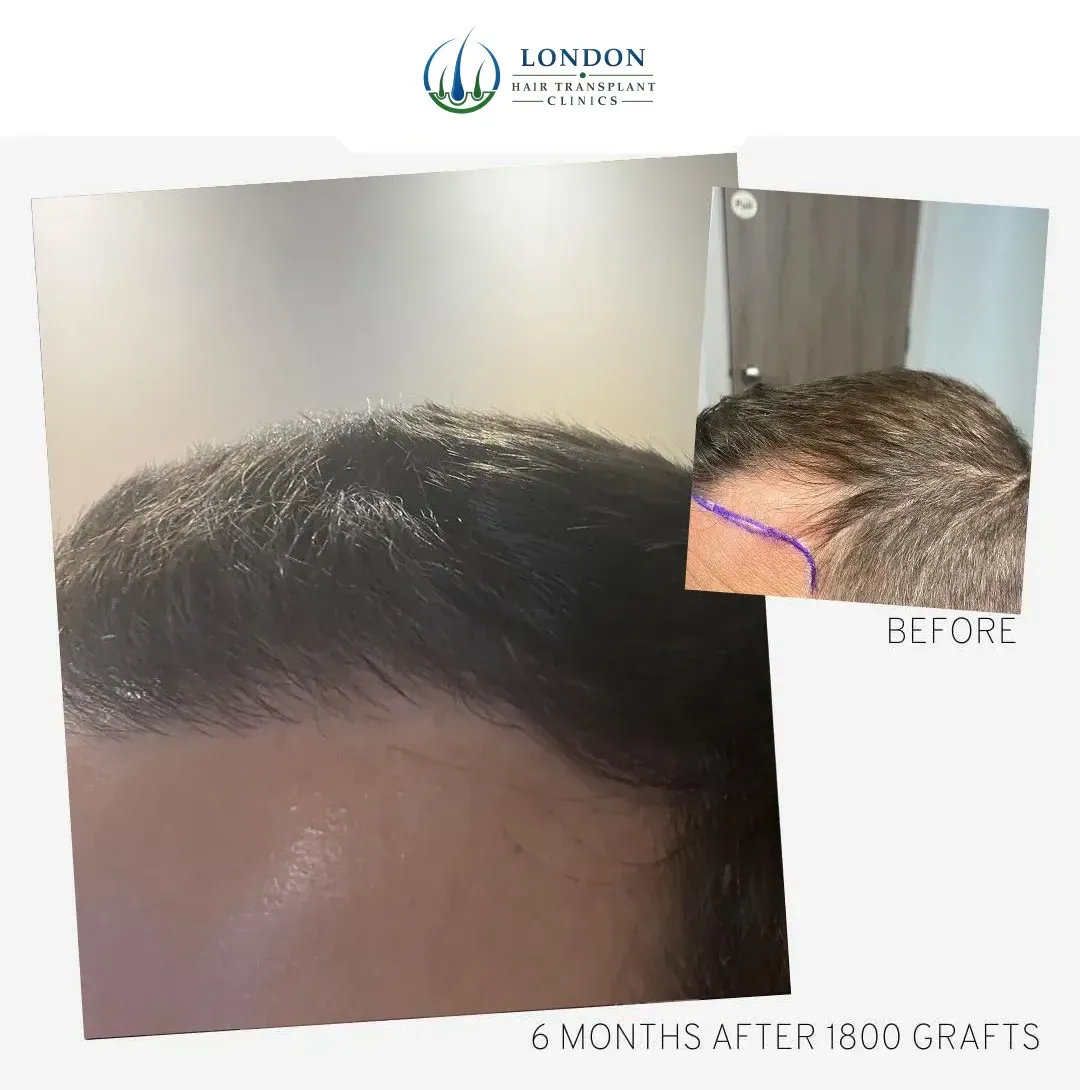
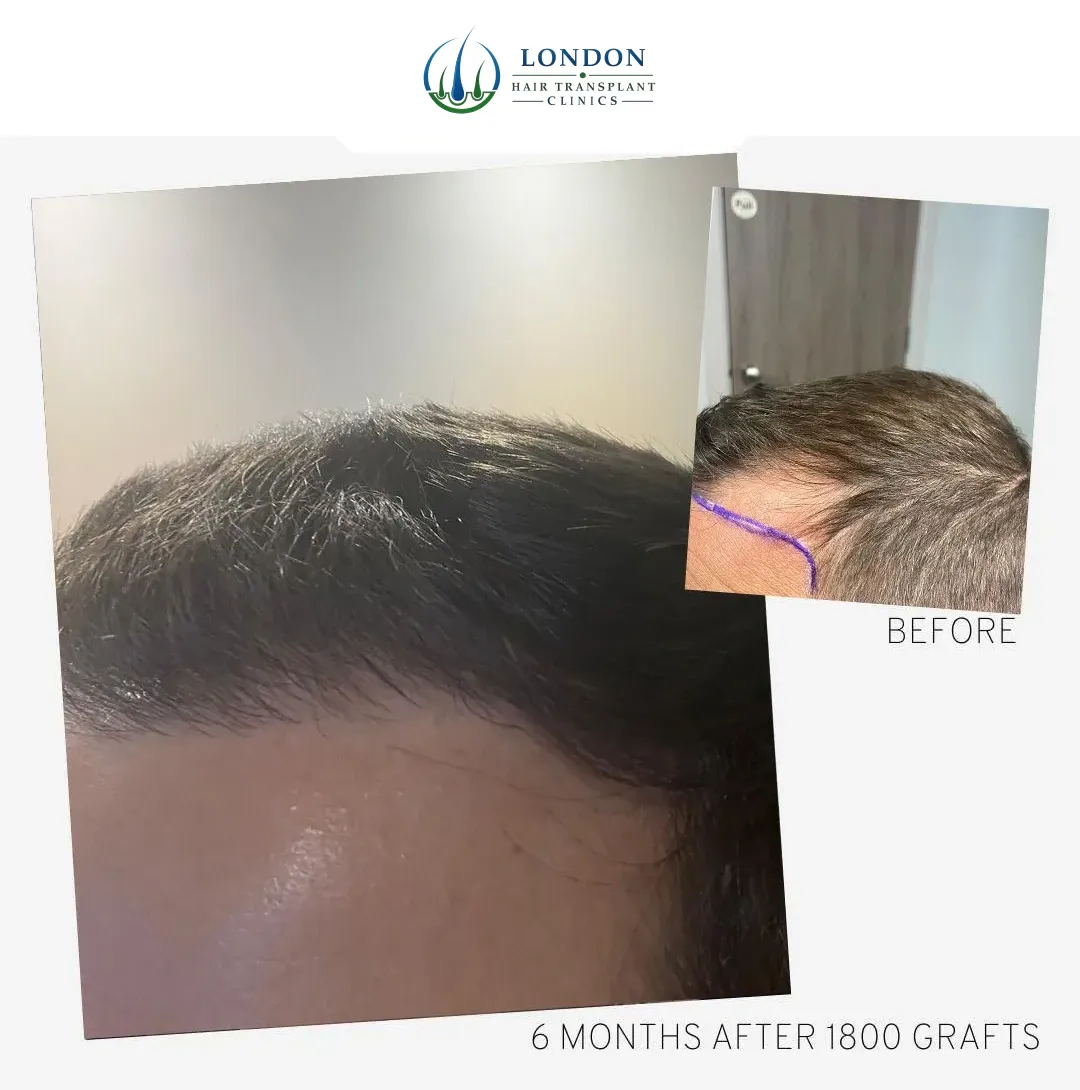
Hairline photographs at follow-up
- Grafts
- 1,800
- Follow-up
- 6 months
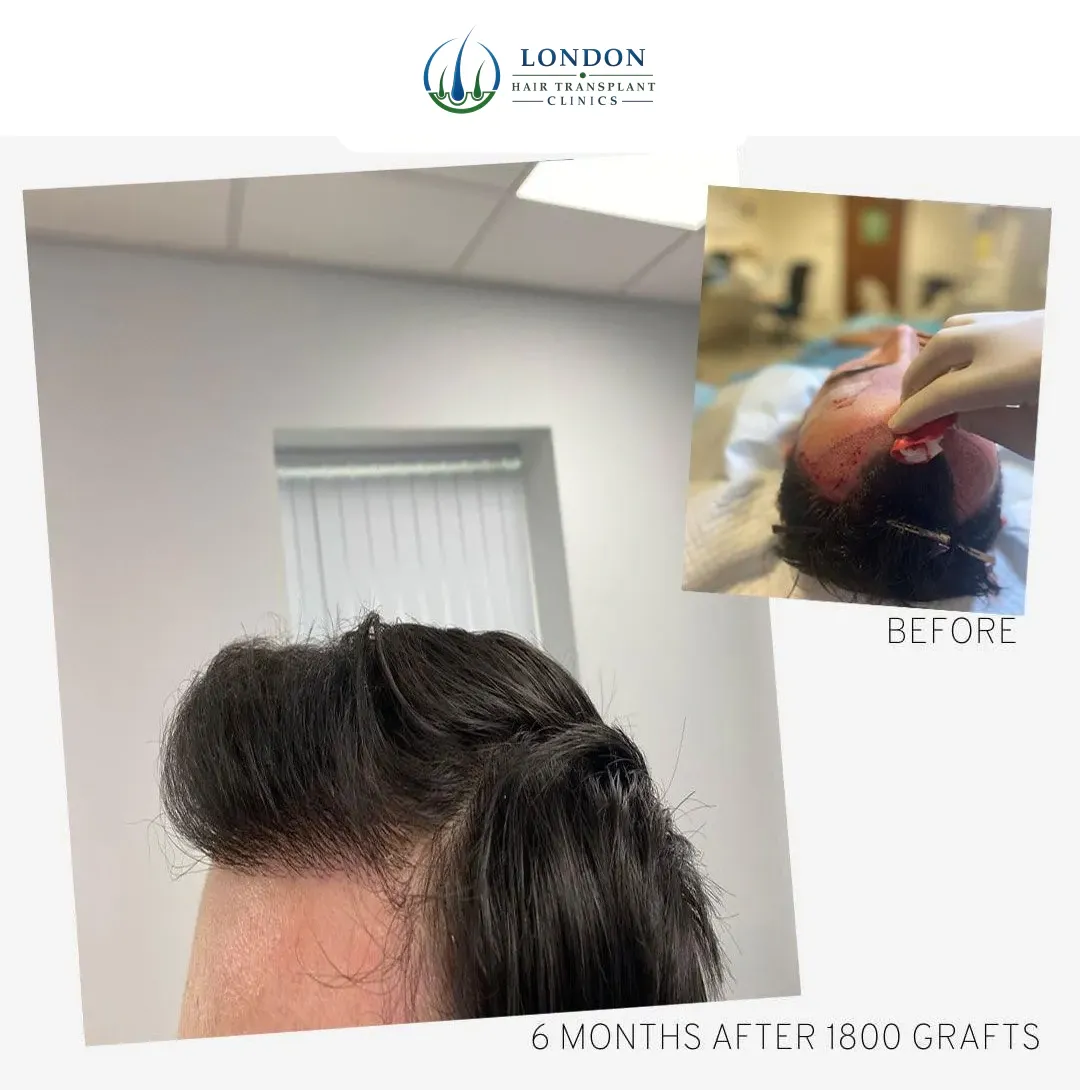
- Grafts
- 1,800
- Follow-up
- 6 months
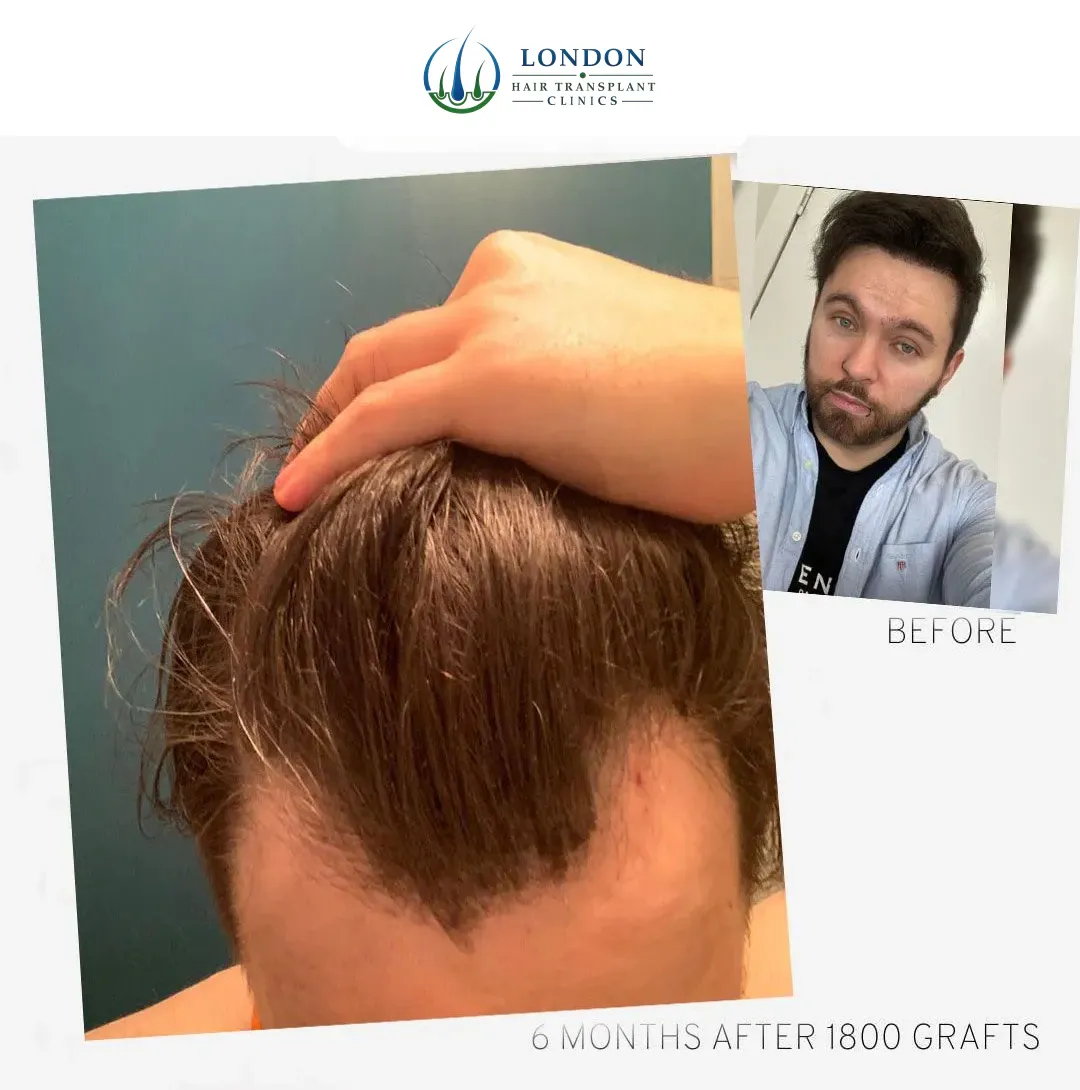
A natural point or a change at the temples?
A widow’s peak is a hairline shape. The middle sits a little farther forwards than the hair to either side. Some people have always had a strong point. In others the same point becomes more noticeable because the temples have receded. The point alone cannot tell you whether you are losing hair.
Compare the corners in photographs taken years apart. Look at the depth of each corner and the hair immediately behind it as well as the tip in the middle. If one side has always sat higher, tell the surgeon. A photograph taken with a side parting and a tilted head can make a stable difference look new.
Three different aims for the same V shape
To keep the point, the surgeon can leave its tip alone and plan coverage in one or both thinning corners. To soften it, grafts can be placed in the indentations beside it so the change of direction is less abrupt. Filling a narrow indentation is a smaller proposal than bringing the full width of the forehead down to the level of the tip.
If you want the tip itself higher, adding hair beside it will not move it upwards. Ask for that distinction to be made clear on the drawing. In some cases the outline you want can already be achieved by changing how the front is parted or worn. There is no medical reason to change a stable peak simply because it is prominent.
Planning and carrying out FUE around a peak
The consultation should include the donor area at the back and sides as well as a close look at the front. The surgeon needs to assess whether the hair behind the current edge is likely to keep thinning. A very dense strip beside the peak could stand out later if the hair farther back becomes sparse.
On the day, check the outline straight on and in profile before the local anaesthetic. With FUE, small groups of follicles are removed separately, then placed into the marked area. Finer grafts at the front can soften the junction with your existing hairs. Their angle should allow them to lie with the peak when the hair is brushed back or across.
Photographs, aftercare and cost
Early photographs show the position of the new hairs but little about the final thickness. During healing, follow the instructions about washing and keeping friction off the front. Some short hairs shed before regrowth. The final appearance takes months to develop, so use the review dates your surgeon recommends. Severe pain or unexpected symptoms warrant a prompt call to the clinic.
For comparisons, photograph the point with the same parting and amount of tension on the hair. Pulling a ponytail tighter can change how much of each corner is exposed. A straight-on picture shows the outline, while a side view helps you see how the placed hairs sit against the forehead.
The cost depends on the area agreed with the surgeon. Ask for a quote that spells out whether the plan includes one corner, both corners or a lower frontal edge. The clinic’s fixed scalp transplant prices are a reference for the listed graft counts. A photograph of the point alone cannot determine the number you need.
Questions about widow’s peak surgery
Is a widow’s peak treated differently from recession?
The same graft collection method may be used. The design differs. For a longstanding peak, the question is whether you want a different shape at all. For recession, the surgeon also needs to consider where thinning may progress and what donor hair should be kept in reserve.
Do I need medication to keep my natural peak?
A stable hairline shape itself does not require treatment. If the corners are gradually thinning, discuss the cause and the options for keeping existing hair with a clinician. Whether a medicine is appropriate depends on your diagnosis and health.
Can a transplant make the sides exactly symmetrical?
The surgeon can plan to reduce a difference between the two sides. Hair direction, thickness and how the grafts grow vary. Ask to see both sides in the mirror and talk about how much asymmetry would still look natural to you.
How should I judge a before-and-after case?
Look for a similar starting shape and check whether the photograph was taken with the hair pulled back. Ask how long after surgery it was taken and whether the case involved one or more procedures. Hair covering the temples can disguise the part of the result you most want to see.
Dr Harpreet Kalra
Dr Harpreet Kalra
Principal hair-transplant surgeon
GMC reference 7126076