Hair transplant advice for patients in Edinburgh
If you live in Edinburgh, email our London team about consultation options. We will confirm your appointment details directly.
Techniques: FUE, FUT, DHI
Approach: Surgeon-Led Planning
Fixed scalp packages 2,500 grafts £3,499 · 3,000 grafts £3,999
Finance Available
Our Certifications:
Hair transplant consultations for patients in Edinburgh
At an Edinburgh consultation, you can discuss hair loss, recession, thinning and what you would like to restore before deciding whether surgery is the right next step.
The assessment should review your hair-loss pattern, scalp condition, medical history and hair characteristics, as well as the strength of your donor area.
Your donor supply is limited. The plan should address the area that concerns you now and allow for the hair around it continuing to thin.
Where surgery is appropriate, options may include FUE, DHI and FUT for the hairline, crown, beard or eyebrows, as well as selected female or specialist cases.
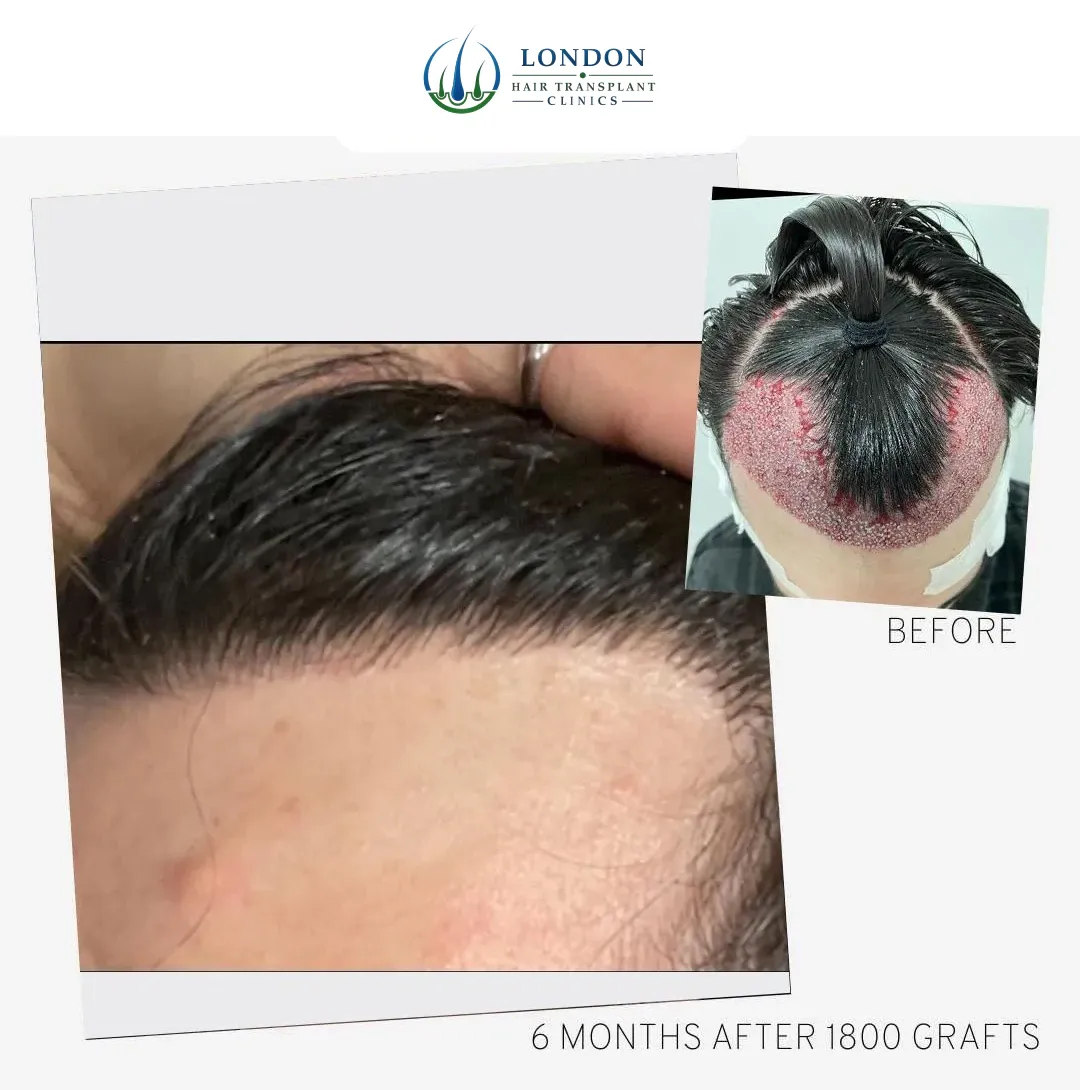
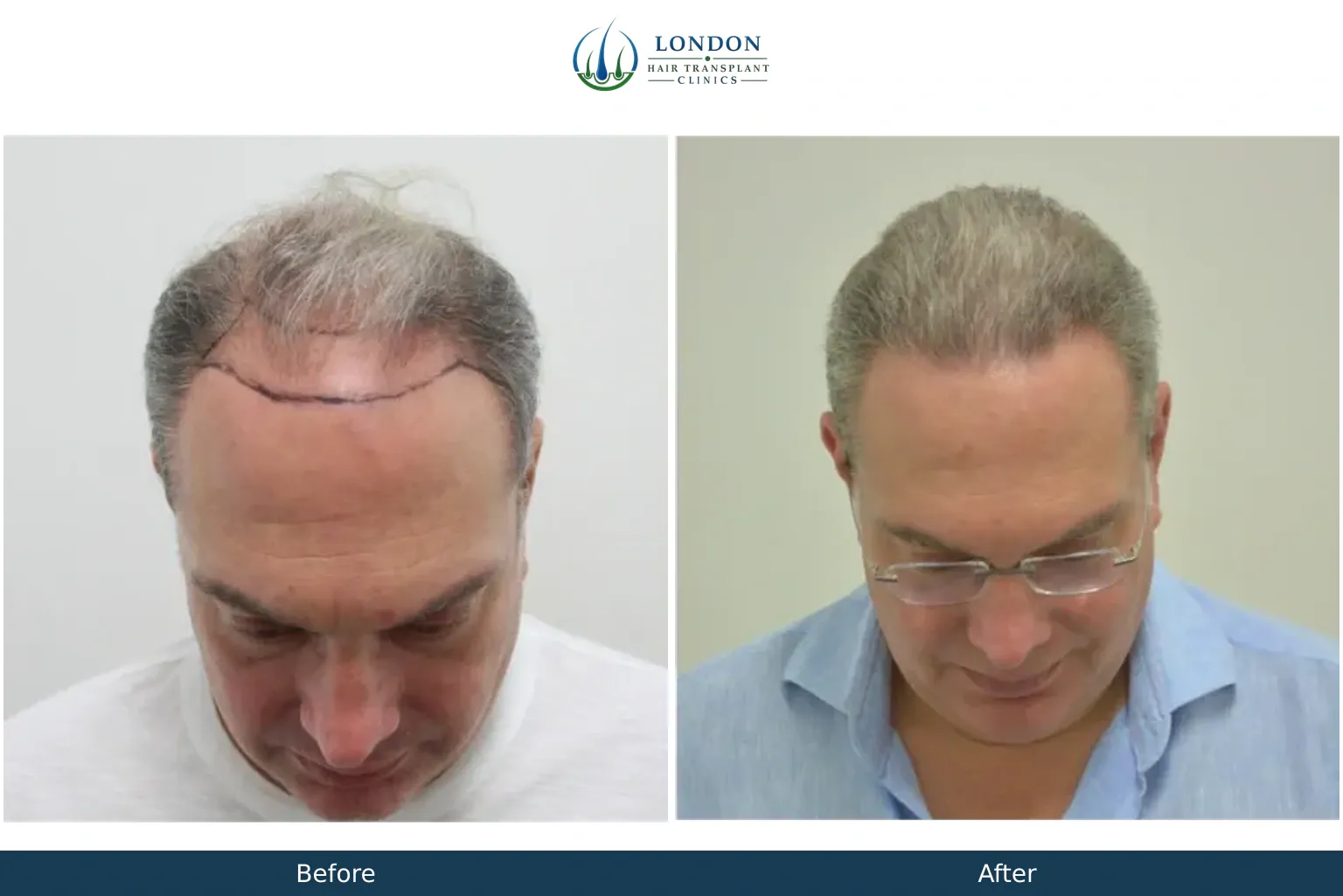
Hair Transplant Before & After Results
A selection of London Hair Transplant Clinics patient results photographed at different stages of postoperative growth.
Hair transplant treatments for patients in Edinburgh
Treatment should be selected according to donor quality, hair-loss pattern, treatment area, graft requirements, hair characteristics and long-term planning.
FUE Hair Transplant
Follicular units are removed individually from the donor area through small circular extraction sites before being transplanted into the recipient area. FUE avoids a linear strip scar, although small extraction scars remain.
DHI Hair Transplant
DHI refers mainly to placing grafts with an implanter. The design of the treated area, graft requirement and overall surgical plan determine whether it is suitable.
FUT Hair Transplant
FUT removes a strip of donor scalp which is divided into individual follicular-unit grafts. It may suit selected cases and leaves a linear donor scar.
Hairline Restoration
Hairline design should take account of facial proportions, age, existing hair, natural growth direction, donor supply and possible future recession.
Crown Restoration
Crown treatment requires careful recreation of the natural whorl while balancing coverage against the amount of donor hair available for future treatment.
Beard Transplant
Beard restoration requires precise control of graft direction and angle when increasing coverage through the beard, cheeks or moustache.
Eyebrow Transplant
Eyebrow restoration requires carefully selected donor hairs positioned at shallow angles to reproduce the changing direction of natural eyebrow growth.
Women’s Hair Restoration
Selected women may be suitable for restoration of the frontal hairline, temples or defined areas of thinning after the cause and pattern of hair loss have been assessed.
Gender-Affirming Hair Restoration
Treatment may involve hairline reshaping, temple restoration or other personalised changes according to the patient's goals, hair-loss pattern and available donor supply.
PRP Hair Treatment
PRP may be considered as a non-surgical option for selected thinning concerns where active follicles remain.
What Should Be Assessed?
- Cause and pattern of hair loss
- Likely future progression
- Donor density and safe graft supply
- Hair calibre, texture and characteristics
- Medical history and scalp health
- Realistic coverage and density expectations
When Surgery May Not Be the First Step
- The cause of hair loss remains unclear
- Hair loss is rapidly progressing
- The donor area is weak or diffusely thinning
- An active scalp condition requires assessment
- The requested coverage exceeds safe donor supply
- A non-surgical approach may be more appropriate first
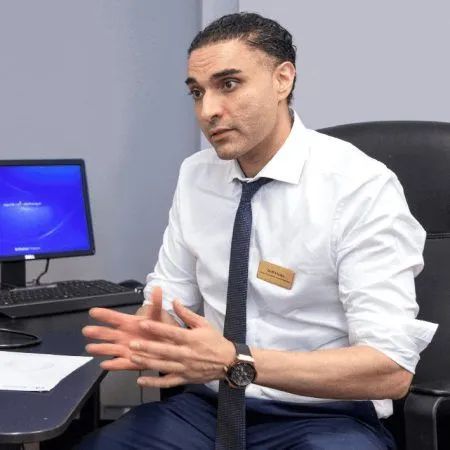
Surgeon-Led Hair Transplant Planning
A plan should start with suitability, preserving donor hair and realistic long-term expectations. A large graft count is not the goal on its own.
Assessment considers donor density, strand thickness and texture, scalp health, medical history, treatment design, future loss and the coverage that can responsibly be achieved.
Dr Harpreet Kalra · GMC 7126076
Hair Transplant Cost
The fixed scalp packages are £3,499 for 2,500 grafts and £3,999 for 3,000 grafts. Both include a complimentary PRP treatment and 18 months’ free aftercare.
Full pricing information is available on our hair transplant cost page.
Finance Available
Finance may be available for eligible patients. Any payment arrangement should be discussed alongside the treatment plan and total procedure cost before booking.
From Consultation to Recovery
Initial enquiry
Discuss your hair-loss concerns, previous treatment and the area you would like restored.
Suitability assessment
Your donor area, scalp condition, medical history, pattern of loss and expectations are reviewed.
Treatment planning
If surgery is suitable, discuss the method, treated area, graft requirement, limitations and expected recovery.
Aftercare & growth
Recovery involves graft protection, washing, donor-area healing and understanding normal postoperative shedding. Our aftercare guide and growth timeline explain the process in more detail.
Hair Transplant Edinburgh FAQs
How much does a hair transplant cost in Edinburgh?
The fixed scalp packages are £3,499 for 2,500 grafts and £3,999 for 3,000 grafts. Both include a complimentary PRP treatment and 18 months’ free aftercare.
Is finance available?
Finance may be available for eligible patients. Any payment terms and total treatment cost should be confirmed before booking.
Which hair transplant techniques can be discussed?
Depending on suitability, treatment planning may include FUE, DHI and FUT alongside hairline, crown, beard, eyebrow, female and selected specialist restoration.
How many grafts will I need?
The graft requirement depends on recipient-area size, existing native hair, donor density, hair calibre and texture, treatment goals and the amount of donor hair that can be used responsibly.
Is FUE or DHI better?
Neither is automatically better for every patient. The overall treatment plan depends on donor supply, recipient-area design, graft requirements and long-term hair-loss considerations.
Does FUE leave scars?
FUE avoids a linear FUT scar, but each extraction site heals with a small scar. Visibility varies with extraction pattern, healing, hair length and individual skin characteristics.
Can transplanted hair shed after surgery?
Yes. Some transplanted hair shafts can shed during the weeks following surgery while the transplanted follicular units remain beneath the skin and later return to active growth.
When does transplanted hair start growing?
Early growth usually appears gradually over several months. Length, thickness and density continue to change as it matures.
Does a hair transplant stop future hair loss?
No. A transplant relocates selected donor follicles, but surrounding native hair may continue to thin. Long-term planning should therefore consider future progression.
Can women have a hair transplant consultation in Edinburgh?
Yes. Selected women may be suitable for transplantation, although the underlying cause and pattern of hair loss should be assessed before surgery is recommended.
Who is Dr Harpreet Kalra?
Dr Harpreet Kalra is featured by London Hair Transplant Clinics for planning hair restoration under a surgeon's care. His GMC reference is 7126076.