FUE Hair Transplant
Follicular unit extraction
Donor hairs collected individually
Used for scalp and hairline restoration
Small circular scars in the donor area
Cost: From £3,499
Follicular unit extraction
Donor hairs collected individually
Used for scalp and hairline restoration
Small circular scars in the donor area
Cost: From £3,499
For patchy or sparse facial hair
Areas: Cheeks, jawline, chin and moustache
Usually uses FUE donor extraction
Hair direction planned for each area
Cost: From £3,499
For thin, uneven or over-plucked brows
Single hairs placed to follow your brow shape
Donor hairs may need regular trimming
Design agreed during your consultation
Cost: £2,499
Follicular unit transplantation
Also called the strip method
A strip of donor scalp supplies the grafts
Leaves a linear scar in the donor area
Cost: Quoted after consultation
Area: The crown and vertex
Grafts follow the natural crown whorl
Coverage depends on your donor supply
Future thinning is considered in the plan
Cost: From £3,499
Hairline and facial-hair restoration
Design shaped around your own goals
Options depend on the area being treated
Your donor hair is assessed first
Cost: From £3,499
Area: Frontal hairline and receded corners
Shape and position agreed with your surgeon
Finer grafts used along the front edge
Planned to blend with your existing hair
Cost: From £3,499
For suitable areas of mature scarring
Scar thickness and skin health assessed
Grafts placed within the scarred area
Suitability varies with the type of scar
Cost: From £3,499
For suitable, localised areas of hair loss
Options for the hairline, temples and scalp
The cause of thinning is assessed first
Donor density helps determine suitability
Cost: From £3,499
For a prominent V-shaped hairline
Can address recession beside the peak
Shape planned around your facial features
The design preserves a natural front edge
Cost: From £3,499
Area: The corners of the frontal hairline
Grafts blend into the surrounding hair
Angle and direction matter at the temples
Donor supply assessed before treatment
Cost: From £3,499
For Afro-textured hair
Planning takes account of curl and texture
Follicle curvature matters during extraction
A donor assessment guides the approach
Cost: From £3,499
Direct hair implantation
Grafts collected individually
An implanter device is used for placement
Suitability discussed at consultation
Cost: From £3,499
Platelet-rich plasma treatment
Prepared from a sample of your own blood
A non-surgical option for selected thinning
One session: £395
Three-session course: £499
Choosing a clinic means knowing who will look after you and what your treatment involves. Here is what you can expect when you come to us.
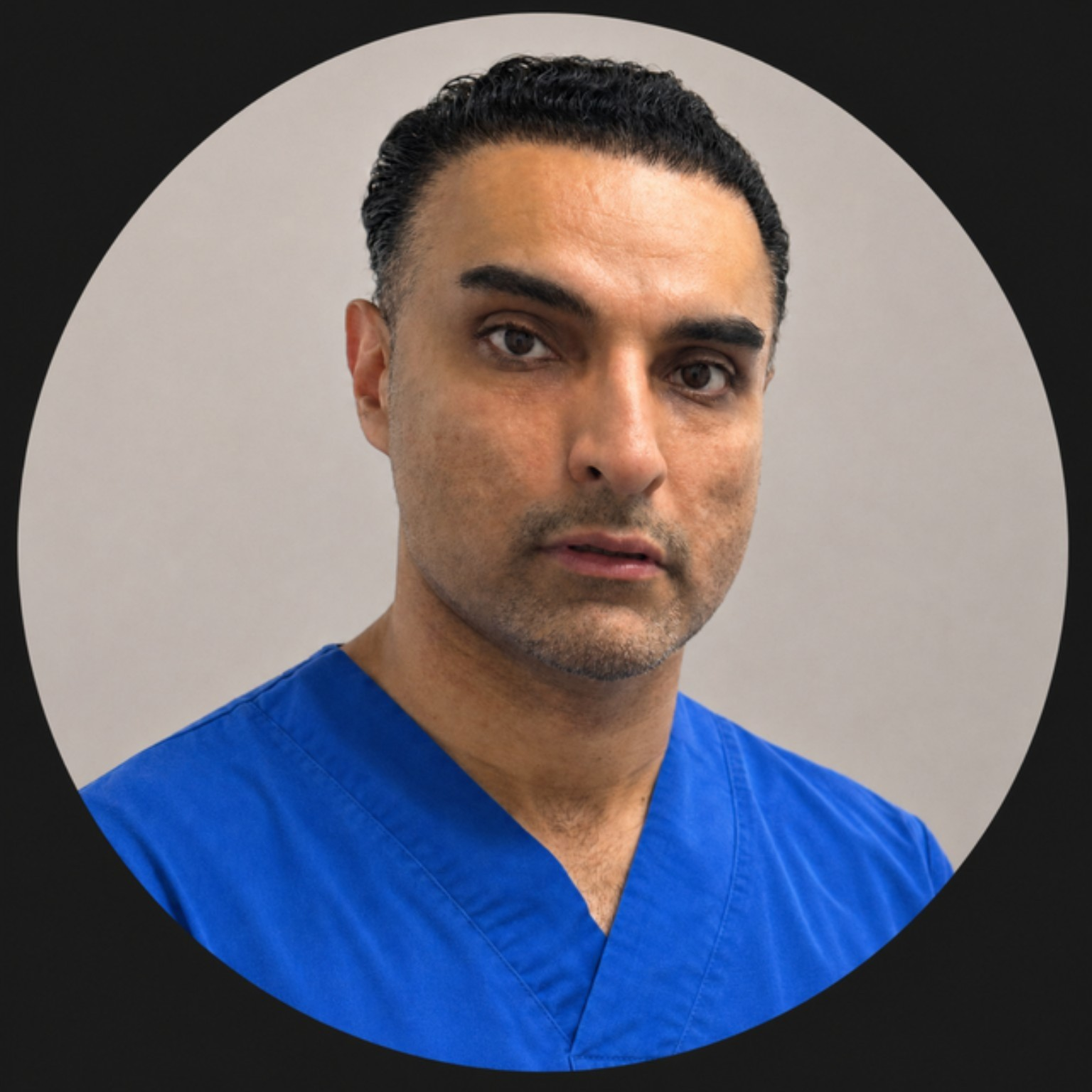
Dr Harpreet Kalra is registered with the GMC. Your consultation is a chance to discuss the procedure and ask questions.
Visit us in London. We can discuss scalp, beard and eyebrow restoration, as well as PRP treatment.
Your existing hair, donor supply and likely future thinning all have a part in deciding what can be achieved.
Tell us which areas concern you. We will explain the options, likely recovery and what treatment would involve.
Hair and beard transplants start at £3,499. You receive a written quote after your individual assessment.
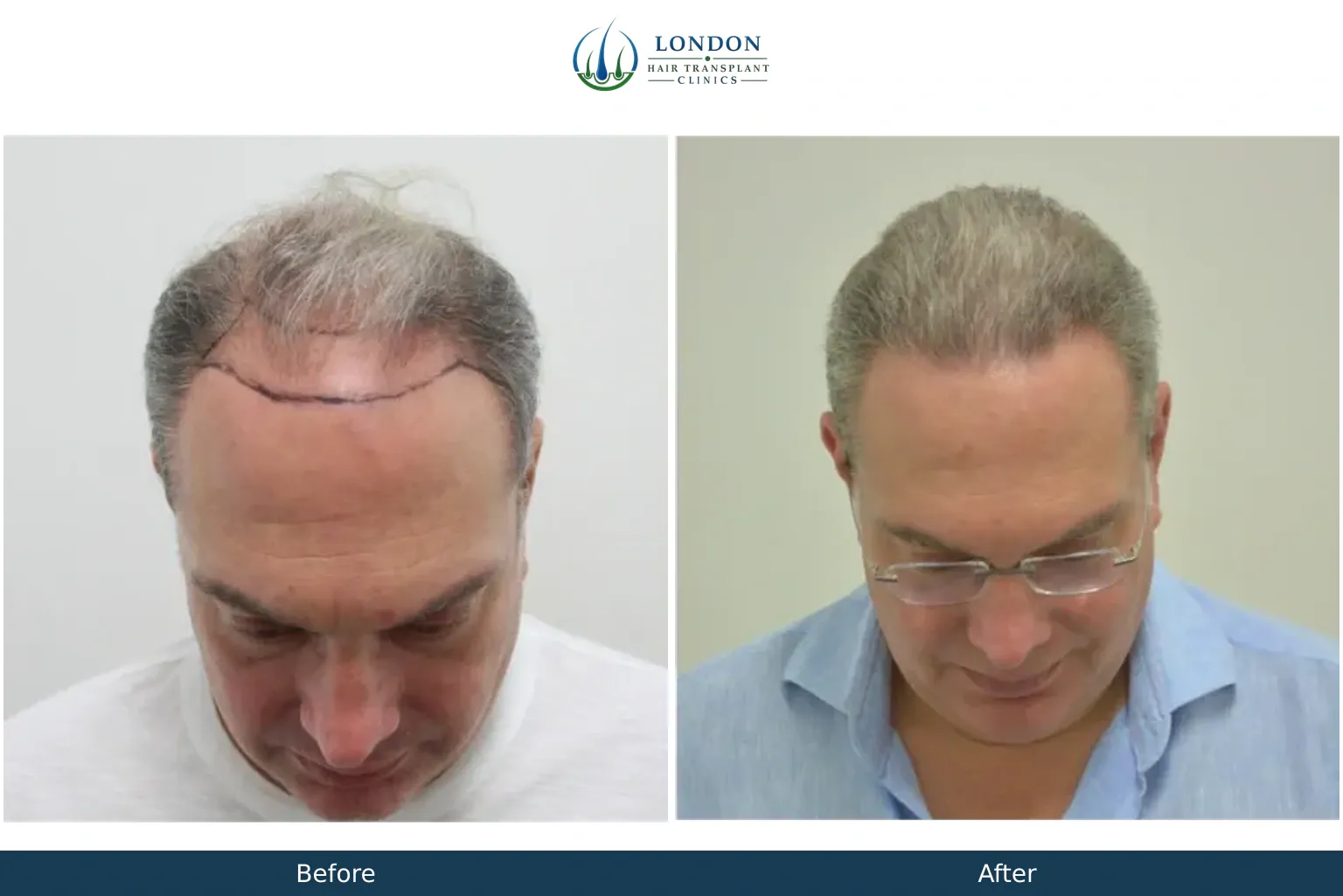
Before-and-after photographs give you a useful starting point when considering treatment. Look at the area treated, how the hairline has been designed and how long it has been since the procedure.
Our patient results gallery includes hairline, crown, beard and eyebrow work. During your consultation, we can explain how your own hair loss and donor supply compare with the cases you have seen.
A transplant moves existing follicles into an area that needs coverage. The result takes time to develop, and your remaining hair can continue to thin. We take both into account when planning treatment.
GMC registration: 7126076
Before recommending surgery, Dr Kalra assesses your pattern of hair loss, scalp health and donor area. Your medical history and what you hope to change are part of that conversation.
You can discuss the proposed design, how many grafts may be needed and the differences between FUE, DHI and FUT. You should also have time to ask about recovery, scarring and the limits of treatment.

The first step is to understand why you are losing hair. At consultation, we look at your scalp, the pattern of thinning and your medical history. For surgery, we also assess the donor hair available. Some people are better suited to non-surgical treatment or further medical assessment.
FUE collects grafts individually. DHI uses individually collected grafts and an implanter for placement. FUT removes a strip of donor scalp, which is divided into grafts. Each has different practical considerations, including scarring and recovery; the choice depends on your assessment.
A transplant fills an area using your own donor hair. It does not prevent the surrounding, non-transplanted hair from thinning later. Your surgeon will consider this when designing the treatment and discussing longer-term care.
Growth is gradual. Transplanted hairs often shed first, with new growth typically beginning at around four months. The full result can take 10–18 months. Your surgeon will explain what to expect for the area being treated and how follow-up is arranged.