
Abbie’s Case study
- Timeframe
- 4 months
3 PRP sessions
PRP treatment
Area Mid-scalp
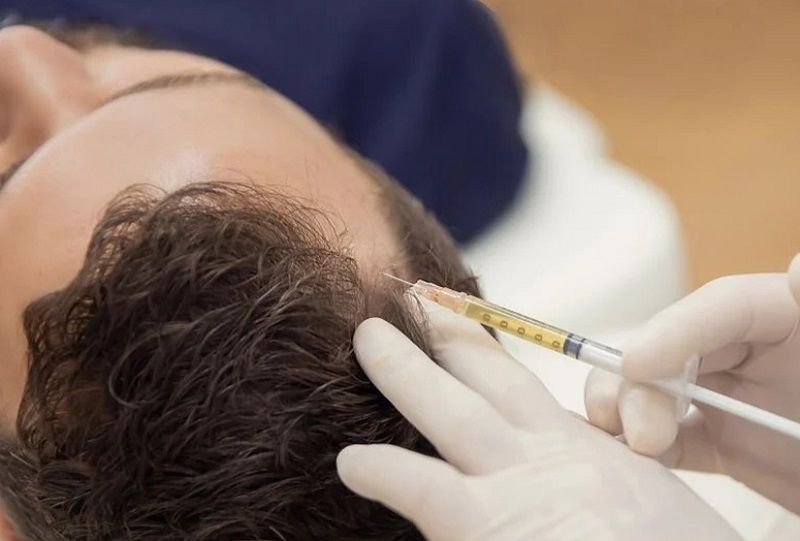
If your parting is becoming wider or your hair looks thinner at the crown, PRP may be one of the treatments worth considering. It uses a concentrated part of your own blood, injected into the scalp, to treat areas where hair is thinning.
At our London clinic, the first step is to assess why you are losing hair. That matters because gradual pattern hair loss, temporary shedding and scalp conditions do not all need the same treatment. A consultation gives you the chance to discuss whether PRP is suitable, what a course would involve and what it will cost.
PRP stands for platelet-rich plasma. Plasma is the liquid part of blood, and platelets are small blood components involved in healing. To prepare PRP, a sample of your blood is placed in a centrifuge, which spins it to separate and concentrate the platelets. The prepared plasma is then injected into the areas of scalp being treated.
Platelets release growth factors. In hair treatment, the aim is to improve the growth of hair from follicles that are still present. PRP does not move hair from one part of your scalp to another, and it does not create a new supply of follicles in a completely bald area.
PRP is therefore different from a hair transplant. The choice depends on your pattern of hair loss, the condition of your scalp and whether the area still has hair that could respond to treatment.
3 PRP sessions
PRP treatment
Area Mid-scalp
3 PRP sessions
PRP treatment
Area Crown & mid-scalp
3 PRP sessions
PRP treatment
Area Middle parting
PRP is most often considered for men and women with early pattern hair loss. This can appear as thinning over the crown or mid-scalp, a widening parting or a gradual reduction in overall density. It is generally more relevant to an area with thinning hair than one that has been bald for a long time.
The cause of the loss needs to be understood before treatment starts. Shedding after an illness, hair loss linked to thyroid problems or a nutritional deficiency, and an inflamed scalp may need a different approach. Sudden or patchy loss should be assessed rather than treated automatically with a course of injections.
Your medical history and current medicines also matter. Tell the clinician about any bleeding or platelet disorder, scalp infection and medicines that affect clotting. These can affect suitability or how treatment is planned. Do not stop prescribed medication yourself in preparation for PRP.
Before treatment, the clinician checks the areas of thinning and discusses the plan with you. A small blood sample is taken, usually from your arm, and processed in a centrifuge. The scalp is cleaned before the prepared plasma is injected at a series of points across the treatment area.
The injections can sting, and some areas of the scalp may be more sensitive than others. Ask about the pain relief available when you discuss treatment. Your appointment also includes preparation and time to go through aftercare; the clinic can confirm how long to allow when you book.
Photographs taken in consistent lighting can make later comparisons more useful. Hair length, styling and the angle of a photograph can change how much scalp is visible, so a review should consider the overall pattern of growth as well as individual pictures.
Some patients notice less shedding or an improvement in hair thickness after PRP, but the response varies. A course cannot promise a particular increase in density, and some people see little change. The British Association of Dermatologists describes the research as limited: studies suggest a benefit, but results are unpredictable.
Results develop over months. It is more useful to agree when progress will be reviewed than to judge treatment after the first appointment. The photographs above show individual patients at the stated timeframes; they are examples, not a prediction of how your hair will respond.
If the area has very few remaining hairs, PRP may offer little improvement. A consultation should explain that limitation before you commit to a course and discuss other options if they are more appropriate.
PRP is usually planned as a course rather than a single treatment. Three sessions, often around a month apart, are a commonly used starting approach. There is no single schedule that suits every patient, so the spacing and review date should be agreed as part of your treatment plan.
Further sessions may be considered if there is a useful response and you want to maintain it. The American Academy of Dermatology describes maintenance at intervals of several months. This does not mean you should continue indefinitely without reviewing whether treatment is helping.
At the review, discuss changes in shedding, photographs and the appearance of your hair. If there has been little improvement, it may be better to reconsider the plan than simply book another course.
Your scalp may feel tender after the injections. Temporary redness, swelling, small bruises or spots of bleeding can occur, and some patients have a headache. Many people return to work the same day or the following day, although comfort and the nature of your work will affect this.
Follow the clinic’s instructions about washing your hair, using products and returning to exercise. Ask before taking pain relief if you are unsure which medicine is suitable for you. Although infection is uncommon, worsening redness, increasing pain or feeling unwell should be reported to the clinic promptly.
The blood sample and scalp injections are both part of the procedure, so PRP is not entirely risk-free even though it uses your own blood. Your clinician should explain the expected effects and any risks that apply to your medical history before treatment.
These treatments do different jobs. PRP is used to try to improve growth in areas with existing follicles. Medicines such as minoxidil may also be considered for some forms of hair loss. A hair transplant moves follicles from a donor area into an area that needs more coverage.
The best starting point is a diagnosis and a realistic aim. Improving a thinning parting is different from rebuilding a hairline or covering a bald crown. Your assessment should consider how much hair remains, whether the loss is progressing and which treatments fit your circumstances.
PRP can also be discussed alongside a hair transplant, but it is not a replacement for grafts and is not automatically necessary for every patient. If it is recommended, ask what it is intended to achieve and whether the cost is separate from your transplant treatment.
A single PRP treatment at our London clinic costs £395. A course of three sessions costs £499. Before booking, confirm the proposed number of appointments, their spacing and any further treatment that may be recommended after the initial course.
A course should be chosen because it suits your hair loss, rather than on price alone. Your consultation is the opportunity to understand the likely benefit and decide whether you want to proceed.
Dr Harpreet Kalra examines your pattern of hair loss and scalp and reviews your medical history before discussing treatment. Bring details of your current medicines and any hair-loss treatments you have already tried, including how long you used them.
You can ask whether PRP is likely to help, how progress will be assessed and what alternatives are available. The consultation should leave you clear about the proposed course and its total cost. Dr Kalra’s GMC reference is 7126076.
Book a consultation to discuss your hair loss and whether PRP is suitable.