
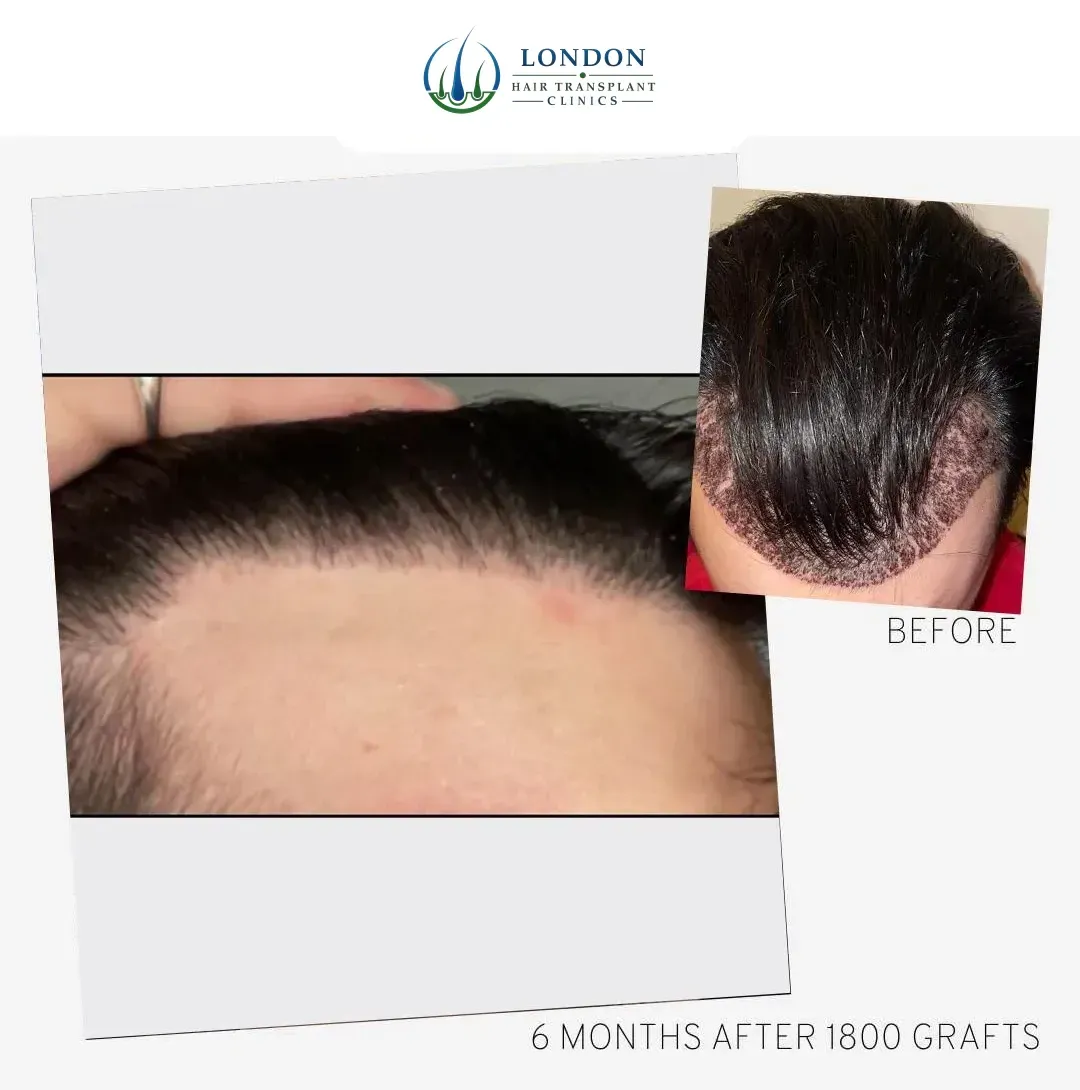
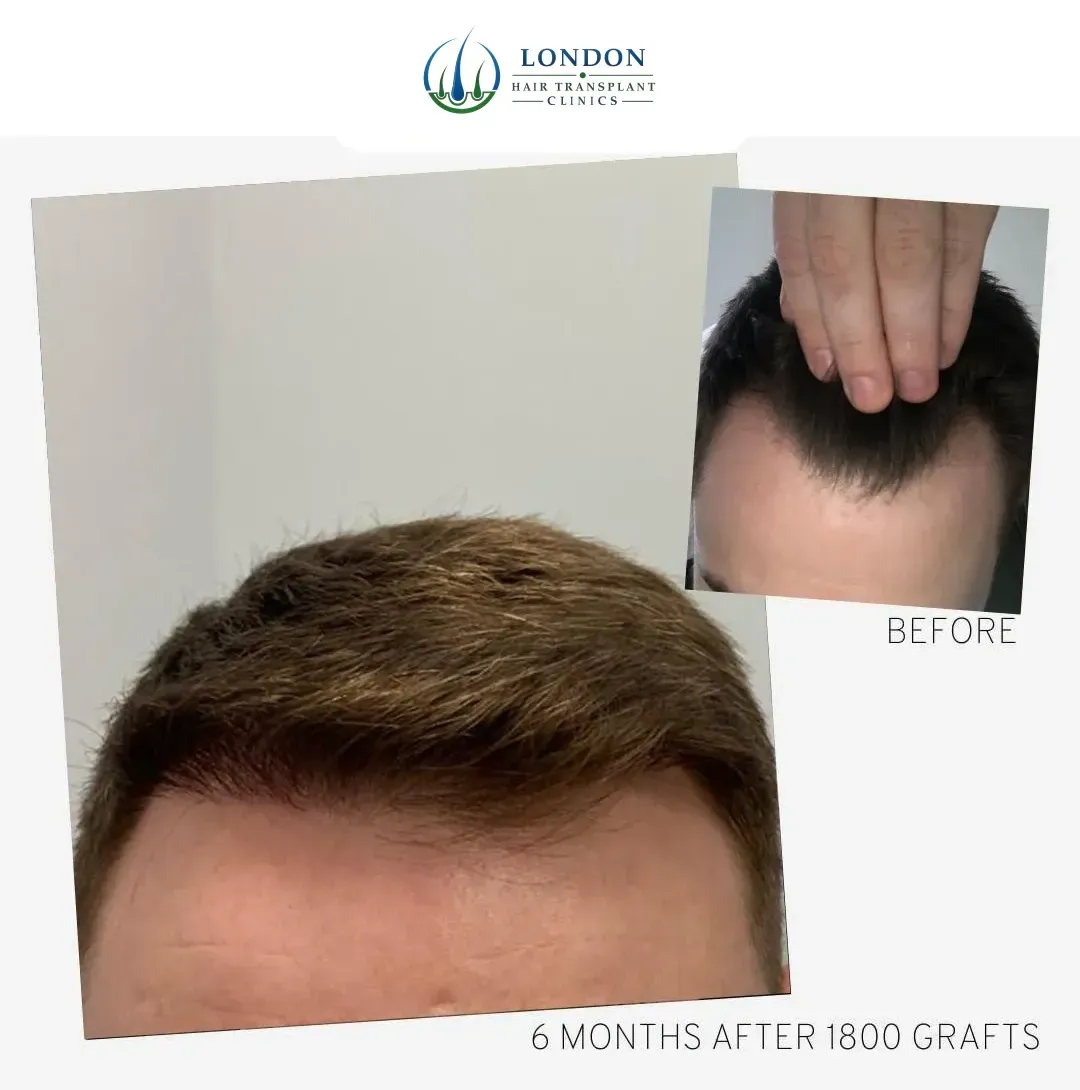
Dean’s Case Study
- Grafts
- 2,000
- Follow-up
- Around 7 months
Receding temples can change the outline of your hairline even when the hair behind it remains thick. A temple hair transplant restores selected areas at the frontal corners or temple points, helping the hair frame your face with a shape that suits your features.
At London Hair Transplant Clinics, we assess the cause of your recession, the strength of your donor hair and what can realistically be achieved. This guide explains the procedure, graft planning, cost, recovery and alternatives to surgery.
A temple hair transplant moves suitable hair follicles from the back or sides of the scalp into areas affected by recession. These follicles are transferred as small grafts containing naturally occurring groups of hairs. The design connects the restored area to the hair already present.
The frontal corners are the areas on either side of the central hairline. The temple points sit further down the sides, near the forehead and sideburns. They are related but distinct features, and some patients need treatment in one area while others need a combined design.
Temple recession often produces an M-shaped outline. Filling the corners can soften that shape, but the aim is not to draw a perfectly straight line across the forehead. A conservative outline, a soft edge and appropriate density help the result sit naturally with your face.
Temple work may be performed on its own or combined with a wider hairline transplant. If recession is making a central peak more prominent, the assessment can also consider widow’s peak restoration.
Follicular unit extraction, or FUE, removes individual grafts from the donor area using a fine punch. The grafts are prepared and placed into the agreed temple design. This avoids removing a strip of scalp, although small circular extraction scars remain.
For temple restoration, the position and direction of each graft matter as much as the total number. Hair at the side of the face often lies very close to the skin and changes direction as it approaches the temple point. Copying the placement used on the crown would not reproduce that pattern.
Your assessment considers the availability of fine single-hair grafts, donor density, hair calibre, curl and the contrast between hair and skin. A dense donor area does not mean that every graft is suitable for the visible temple edge.
DHI describes the use of an implanter device during placement and commonly follows FUE donor extraction. It is not automatically a better choice for every temple procedure. Site planning, graft handling and an appropriate design remain central to either approach.
Selected smaller procedures may be suitable for limited shaving or an unshaven approach, depending on access and existing hair. FUT obtains grafts from a strip of donor scalp and leaves a linear scar. The consultation explains the relevant options and why a particular method is recommended. Our FUE guide describes individual graft extraction in more detail.
Treatment is usually arranged as a day procedure under local anaesthetic. It can take several hours; a small temple correction and a larger frontal rebuild have different requirements. Your appointment plan explains the expected length of the session and the stages involved.
We review your medical history, hair-loss pattern, previous treatment and donor area. The proposed outline is marked with attention to the frontal corners, temple points, natural asymmetry and likely future recession. You discuss the shape and planned coverage before treatment begins.
The donor and recipient areas are prepared, with shaving where required by the agreed method. Local anaesthetic numbs the treatment areas. You remain awake, and the team checks comfort throughout the procedure. The anaesthetic injections can cause brief discomfort.
Individual follicular units are collected using a small punch. The grafts are inspected, counted and sorted according to their characteristics, including the number of hairs they contain. They are kept hydrated while awaiting placement. Extraction must preserve the appearance and future usefulness of the donor area.
The recipient sites follow the marked design. Their angle, direction, depth and spacing determine how the transplanted hairs will emerge. The openings are matched to the grafts and adapted as the direction changes between the frontal corner and the lower temple point.
Fine single-hair grafts help create a soft leading edge. Suitable grafts behind the edge provide coverage, with distribution adjusted to the existing hair. Temple points often require a lighter finish than the central front. More density is not always a better design.
You receive guidance on washing, sleeping, protecting the grafts and returning to normal activities. The team explains your follow-up arrangements and how to contact the clinic with a concern. Follow the instructions prepared for your procedure, particularly during the first two weeks while the grafts settle.
Our guide price starts from £3,499, subject to consultation and assessment. Your quotation depends on the size of the areas being treated, the estimated graft requirement, the method and the complexity of the design. A temple-only correction differs from rebuilding the corners and the entire frontal hairline.
The consultation should make clear which areas are included, the planned graft range and the follow-up arrangements. Comparing prices is more useful when you also compare the proposed design, who will perform the treatment and what the quotation covers. See our treatment prices and finance options.
There is no fixed number for every patient. A graft is a follicular unit, rather than necessarily a single hair. The estimate combines the area to be covered with the intended density and the characteristics of the available donor hair.
For frontal-corner work, broad planning examples can fall around the following ranges. These are illustrative totals across the proposed treatment area, not a prescription or a fixed price package:
Some temple plans fall outside these ranges. Reconstructing small lower temple points is different from filling deep frontal corners, so the terms should not be used interchangeably when comparing graft numbers. Hair thickness, curl, existing growth and the desired outline can all change the estimate.
Bringing the hairline further forward increases the area needing coverage. The surgeon must balance that request against a finite donor supply and possible future loss. The graft calculator explains the relationship between area and density; an assessment confirms the actual plan.
Suitability depends on the cause and stability of your recession, the health of your scalp and the quality of the donor area. The proposed result should look appropriate now and remain workable as your hair changes with age.
Age is part of the discussion, rather than a single pass-or-fail rule. In younger adults, the eventual extent of pattern loss may still be unclear. Waiting can sometimes make long-term planning easier. Diffuse thinning, active scalp inflammation or unexplained recent shedding may also need investigation first.
Previous surgery and donor scarring are assessed individually. Women seeking temple restoration need the same attention to diagnosis, including traction and diffuse thinning where relevant. Further information is available in our female hair transplant guide and donor area guide.
The temples form the transition between the forehead and the sides of the face. As the corners recede, the forehead can look wider and a central peak can become more noticeable. Even a relatively small change can affect the way a hairstyle sits.
Some people first notice the difference in photographs or when styling their hair backwards. Others find the left and right sides are receding at different rates. The effect on confidence is personal; a transplant is an option to consider, rather than something everyone with recession needs.
A useful consultation starts with what bothers you about the current outline. That may be one deep corner, an uneven front or loss of the lower temple point. Identifying the specific concern helps avoid using grafts in areas that do not need treatment.
Temple work occupies a small area in a very visible position. A dense patch can still look unnatural if the angle, hair calibre or outline is wrong. The design must account for the changing direction between the front and the sides, rather than repeat one placement pattern throughout.
The condition of the skin, previous scarring and the amount of existing hair also affect placement. Ask the surgeon to explain the intended outline, show relevant examples and discuss the limitations of your donor area. The objective is a coherent result across the whole hairline.
A common cause is androgenetic alopecia, also called pattern hair loss. Genetic susceptibility and the effect of dihydrotestosterone, or DHT, contribute to gradual miniaturisation of affected follicles. Over successive cycles, the hairs become finer and less visible.
In men, recession may first appear at the frontal corners, sometimes alongside thinning at the crown. The Hamilton–Norwood scale describes patterns such as stages 2 and 3 and the 3-vertex pattern involving the crown. It helps describe the distribution, but does not predict exactly how quickly an individual will lose hair.
A mature or naturally high hairline is not automatically progressive baldness. Comparing older photographs and examining the hair can help distinguish a stable outline from continuing recession. Our male pattern baldness guide explains the condition further.
Other causes need a different approach:
Sudden loss, patches, soreness or an inflamed scalp should be assessed before planning surgery. A transplant does not treat the underlying cause of every type of hair loss.
If the hairline is still changing, or you would prefer to avoid surgery, assessment and monitoring can be a sensible starting point. Treatment aims depend on the diagnosis: preserving existing follicles is different from rebuilding a largely bare corner.
Finasteride reduces DHT and may help suitable men with pattern hair loss. In the UK, tablets for hair loss require a private prescription. A clinician should discuss suitability and possible adverse effects, including sexual side effects and mood changes. Topical preparations also require individual medical advice; they should not be assumed to be equivalent to licensed tablets.
Topical minoxidil can help some men and women with pattern thinning. Benefit varies and continued use is generally needed to maintain it. Oral minoxidil may be considered by a specialist for selected patients, but its use for hair loss is off-label and needs a separate assessment and monitoring.
Changing a tight hairstyle or treating an identified medical cause may be more appropriate than surgery. Consistent photographs can help show whether recession is stable. Styling changes or cosmetic camouflage are also options for people who do not want treatment.
Medicines do not work for everyone and cannot guarantee restoration of a receded temple. They may help support existing hair, while a transplant redistributes follicles to the area being rebuilt. The two approaches can be discussed together when appropriate.
The appearance changes in stages. Early redness and scabbing do not show the eventual result, and the transplanted hairs may shed before new growth develops. Your own aftercare plan takes priority over a general timeline.
Our aftercare guide and guide to shedding and shock loss explain these stages in more detail.
A temple transplant may suit someone with an established area of recession, enough appropriate donor hair and a realistic design. It can improve the outline and balance of the hairline, but the decision should follow a diagnosis and a clear discussion of the expected result.
Transplanted follicles are selected from areas usually less affected by pattern loss and can provide lasting growth. The surrounding native hair can still thin, and no procedure guarantees a particular density or that further treatment will never be needed.
Take time to understand the proposed shape, who will perform the treatment, the quotation and the follow-up plan. You should be comfortable with both the appearance being proposed and the amount of donor hair it requires.
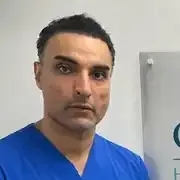
Principal hair-transplant surgeon
GMC reference 7126076
Your temple assessment brings together donor strength, facial proportions, hair direction and the possibility of future recession. The proposed graft distribution should support the whole hairline, rather than treat each corner in isolation.
Discuss the outline you would like and ask how the recommendation relates to your existing hair. The consultation is also an opportunity to understand recovery, follow-up and the limitations of the procedure.
Meet Dr Harpreet Kalra to discuss your goals at a consultation.
It transfers suitable follicular-unit grafts from the donor area into receding frontal corners or selected temple points. The aim is to restore an outline that blends with the existing hairline.
Yes, when the assessment supports it. The two sides are planned together, allowing for differences in recession and natural facial asymmetry. They do not always need exactly the same number of grafts.
The number depends on the area, intended density and available donor hair. A limited corner correction may need several hundred grafts, while wider frontal restoration can need considerably more. Your consultation provides an estimate for the actual design.
FUE is a method of collecting individual grafts. DHI describes an implanter-based placement approach that commonly uses FUE extraction. Either may be considered where appropriate; the design and graft selection remain essential.
Early regrowth may become visible around three to four months, with coverage continuing to develop over the following months. The fuller result can take 10–18 months. Growth timing varies between patients.
Our guide price starts from £3,499, subject to consultation and assessment. The quote reflects the treatment area, graft requirement, method and complexity of the planned restoration.