Tommy’s Case Study
Timescale
Around 13 months
Grafts
2,000

2,000 grafts
Follicular unit extraction (FUE)
Area Hairline
4,934 grafts
Follicular unit extraction (FUE) · Two-stage
Area Hairline, mid-scalp & crown
2,758 grafts
Follicular unit extraction (FUE)
Area Crown & mid-scalp
2,558 grafts
Follicular unit extraction (FUE)
Area Hairline, mid-scalp & crown
FUE describes how the surgeon takes the donor hair. Small grafts are removed individually, usually from the back of the scalp, then placed where coverage is needed. The practical question is how much hair can be moved while leaving the donor area looking even.
Look at the proposed donor area as well as the area you want filled. FUE leaves small dot scars, which may show through a very short haircut. If you usually wear a skin fade, tell the surgeon before you agree on a plan.
You may need a week or two away from work. The grafts need particular care in the first fortnight. Ask for written guidance about washing, headwear and returning to your job, especially if you wear a helmet or work outdoors. The clinic should give you a number to call if pain becomes severe or you develop unexpected symptoms.
Some of the transplanted hairs can shed in the weeks after surgery. New growth usually begins around four months, and the final appearance can take 10 to 18 months. Discuss the possibility of bleeding, infection and grafts failing to grow before you consent.
Your surgeon can explain how many grafts your scalp can provide and what they could cover.
FUE stands for follicular unit excision, also called follicular unit extraction. It describes the way the surgeon collects hair. It can be used to supply grafts for a hairline, a crown or another suitable area. The same method can produce very different results depending on the donor hair and the area to be covered.
The assessment starts with the cause of the loss. Gradual pattern thinning can leave a reasonably stable donor area. Sudden patchy loss or thinning across the whole scalp calls for a diagnosis first. A surgeon also needs to consider your likely future loss. Using most of the available grafts at the front now could leave few options if the scalp behind it thins later.
Before the operation, look at the proposed treatment area upright in a mirror. If two areas are being treated, the written plan should say how the grafts are divided. Ask to see the donor area marked too, especially along the sides if you usually wear a fade.
After local anaesthetic, the surgeon uses a small circular instrument around selected follicular units. Each unit is a naturally occurring group of one or more hairs. The grafts are prepared for placement. This is why ‘3,000 grafts’ and ‘3,000 hairs’ mean different things. Ask which number appears in your quotation.
The direction of the small openings in the receiving area helps determine how the new hair will lie. The front edge and the centre of a crown require different angles. The team places the prepared grafts and checks the treated areas before giving you washing and contact instructions. A large area may require more than one session.
With FUE, separate small wounds are spread through the donor zone. With FUT, a strip of hair-bearing skin is removed and divided into grafts under magnification. Closing the strip wound leaves a line. Someone who keeps their hair longer may cover a line readily, while a close crop can reveal either a line or the small marks left by FUE. The distribution of the marks matters as much as the name of the technique.
An implanter pen is a way to place a graft. A clinic may describe this stage as DHI. Grafts placed with a pen can still have been removed by FUE. When comparing quotations, ask how the grafts will be taken, how the sites will be made and who carries out each surgical step. The British Association of Aesthetic Plastic Surgeons’ patient guide explains the roles of the surgeon and team.
Make time for both areas to heal. The donor area can feel tight or sore and the grafted area can develop small crusts. Early aftercare is about protecting the newly placed grafts. Get instructions for the first wash, sleep and any work headwear before you leave. If you receive sedation, follow the clinic’s transport instructions.
At first, the short visible hairs can fall out. That can be unsettling if the hairline looked more defined the week after surgery. Photograph it before treatment and at the review dates, with the same haircut where possible. The surgeon can then distinguish changes inside the treated area from thinning in the original hair next to it. If you develop severe pain or another unexpected symptom, contact the surgical team promptly.
The donor area is usually clipped for FUE. Depending on the size of the session and your hairstyle, longer hair may conceal a clipped section. Ask the surgeon to draw the area that would actually be clipped before you commit to a date.
Local anaesthetic numbs the scalp. The injections can sting and you may notice pressure or movement. Tell the team if an area feels painful during surgery so they can check it. Soreness after the anaesthetic wears off is a separate issue to discuss in your aftercare plan.
Dr Harpreet Kalra is listed as the clinic’s hair transplant surgeon, GMC 7126076. Confirm the name of the operating doctor for your date. Ask who assesses the donor area, makes the incisions, places the grafts and reviews any concern afterwards.
Begin with the amount the surgeon can safely remove and the proposed distribution. A larger package does not by itself improve the result. If the agreed count changes on the day, ask how the team will record the actual count and explain any change to the plan or fee.
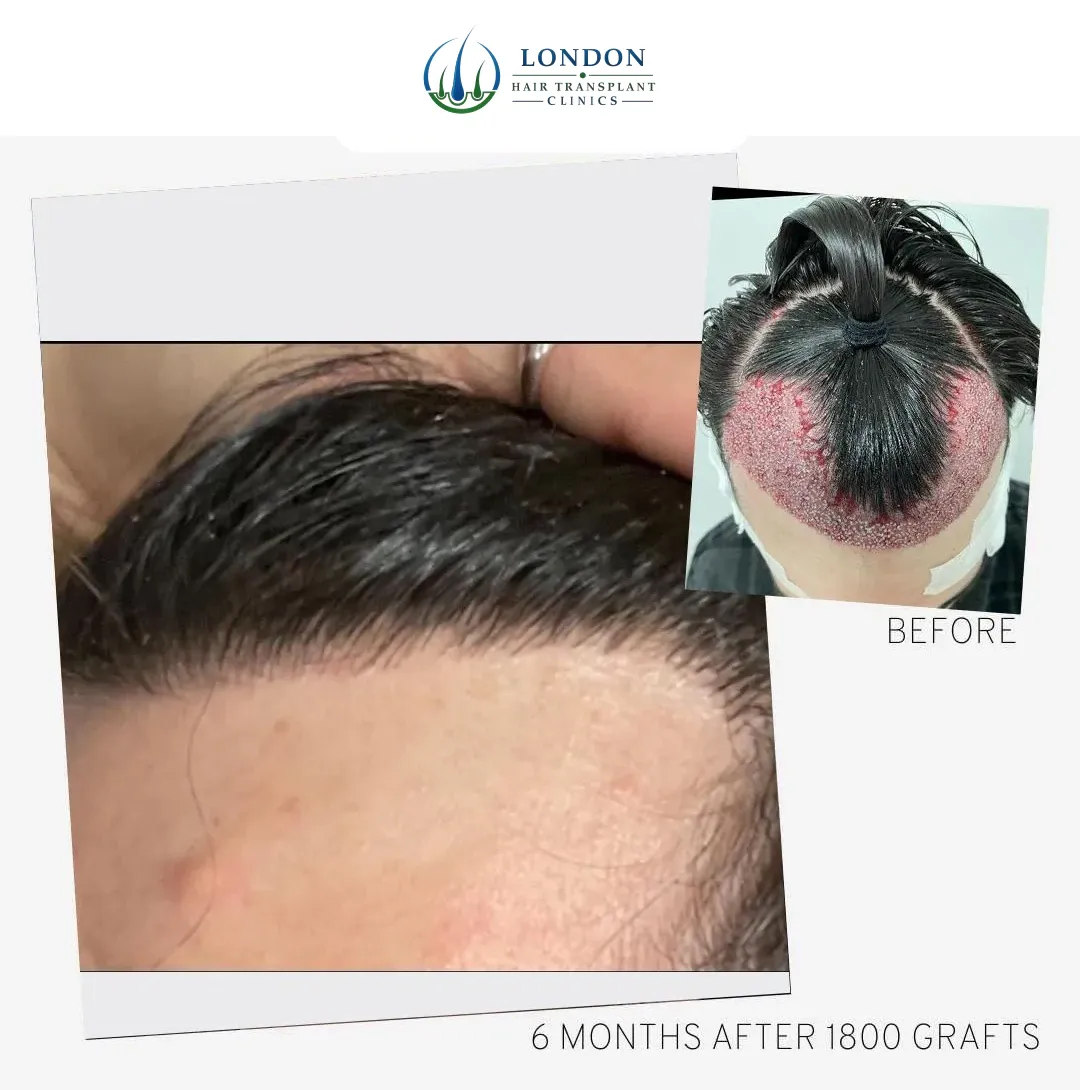
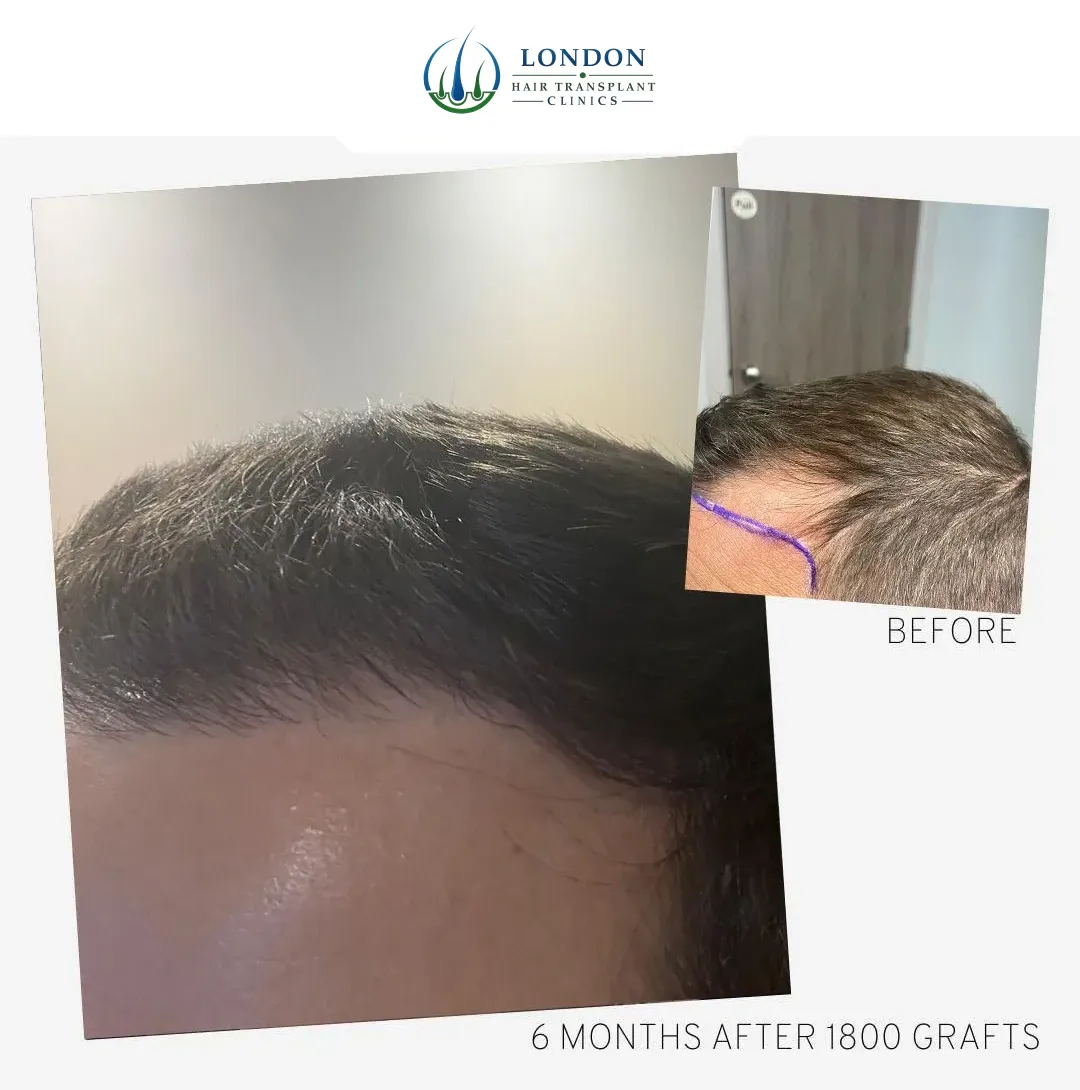
Benjamin and Eddie are pictured at their six-month follow-ups.
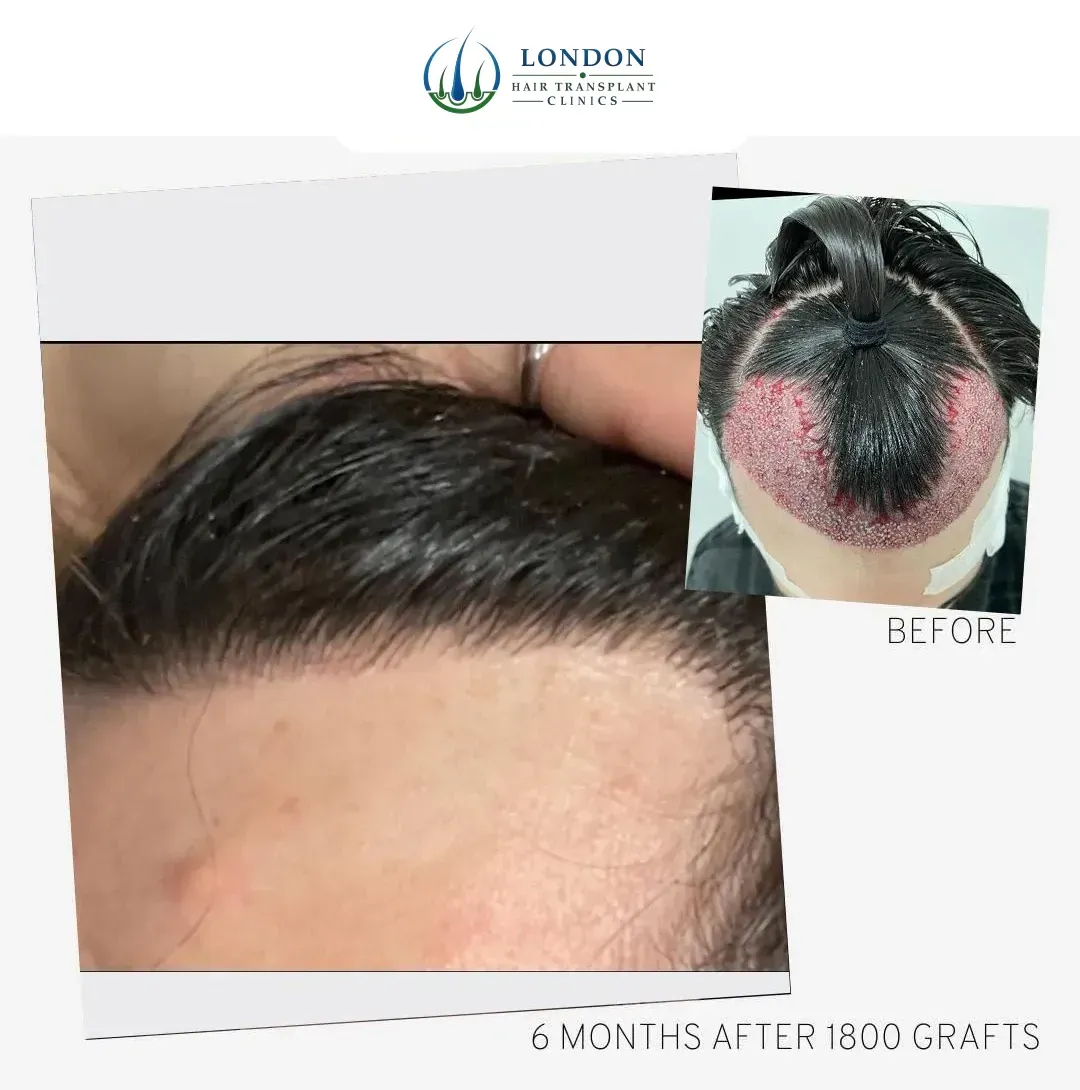
1,800 grafts · Around 6 months
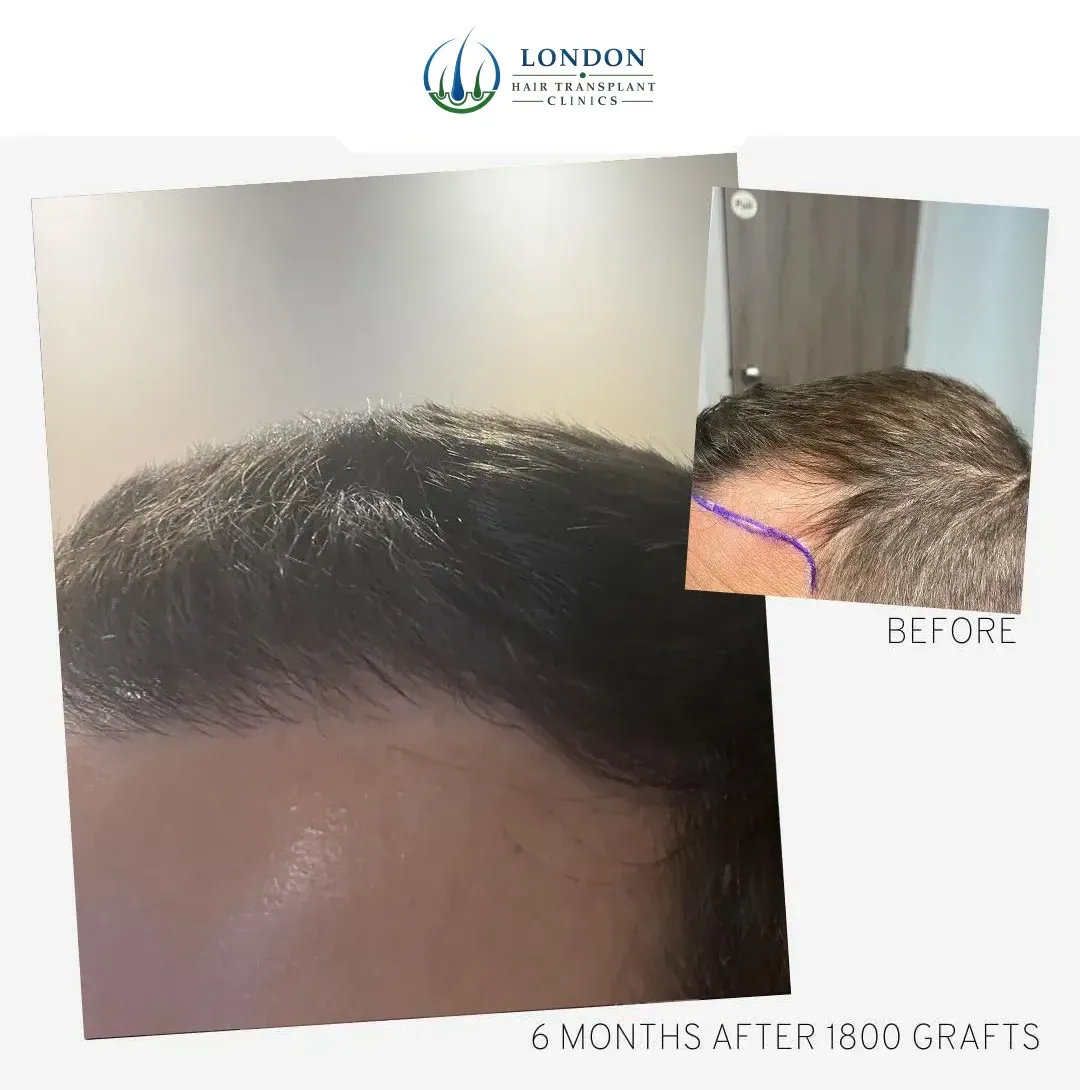
1,800 grafts · Around 6 months