
Hair transplants for women in London
- Approach: Surgeon-Performed
- Surgeon: Dr Harpreet Kalra
- Finance Available
Contents [show] [hide]
- When the parting is getting wider
- Will there be enough donor hair?
- Wearing your hair after surgery
- Patient Results and Case Studies
- A widening parting, thinning temples or sudden shedding
- A transplant along the parting or the hairline
- Shaving, donor hair and the day of surgery
- Healing, growth and costs
- Questions about surgery for women
- Our Surgeons
A wider parting, a bare patch at the temple and a sudden increase in shedding can look similar in a photograph. They raise different questions. The first decision is whether there is a lasting gap that surgery could reasonably fill.
When the parting is getting wider
Tell your GP or dermatologist when you first noticed the change and whether you are shedding more than usual. Female pattern hair loss often shows through the parting. Illness, childbirth and other changes can trigger temporary shedding. The cause matters because new growth may change how much scalp you can see.
Will there be enough donor hair?
A transplant moves hair that you already have. If the back and sides are thinning as well, taking grafts from them can make another area look sparse. Ask the surgeon to show you the proposed donor area and explain what coverage you could expect along your usual parting.
Wearing your hair after surgery
If keeping your length matters, ask exactly where the team would trim or shave and how visible that patch would be with your hair tied up. Bring a photo of the style you wear for work. Ask for the proposed treatment area, the fee and the follow-up plan in writing.
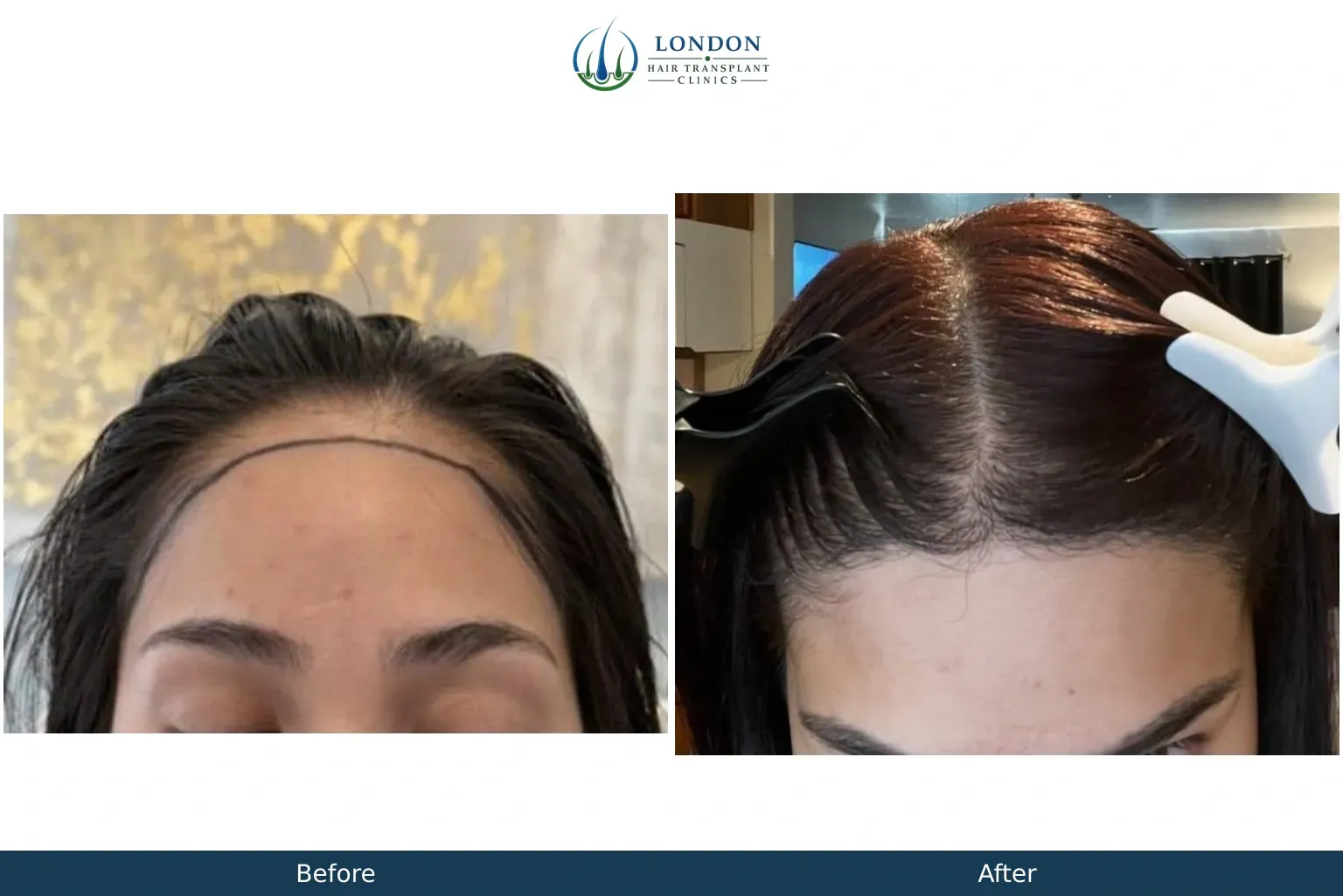
Patient Results and Case Studies
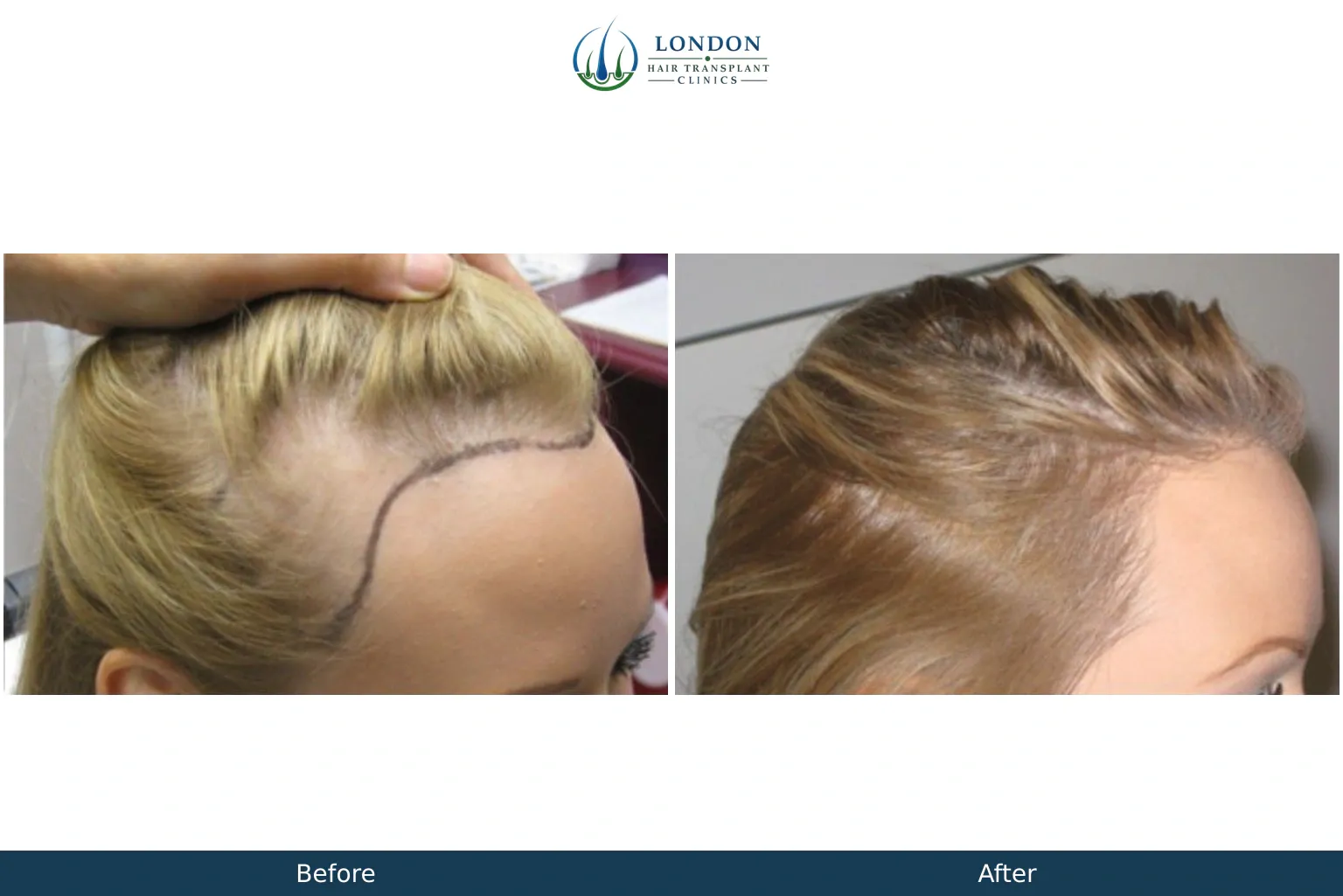
Sonya’s Results
- Timeframe
- Around 9 months
- Grafts
- 1,200
- Method
- Follicular unit extraction (FUE)
- Area
- Temple
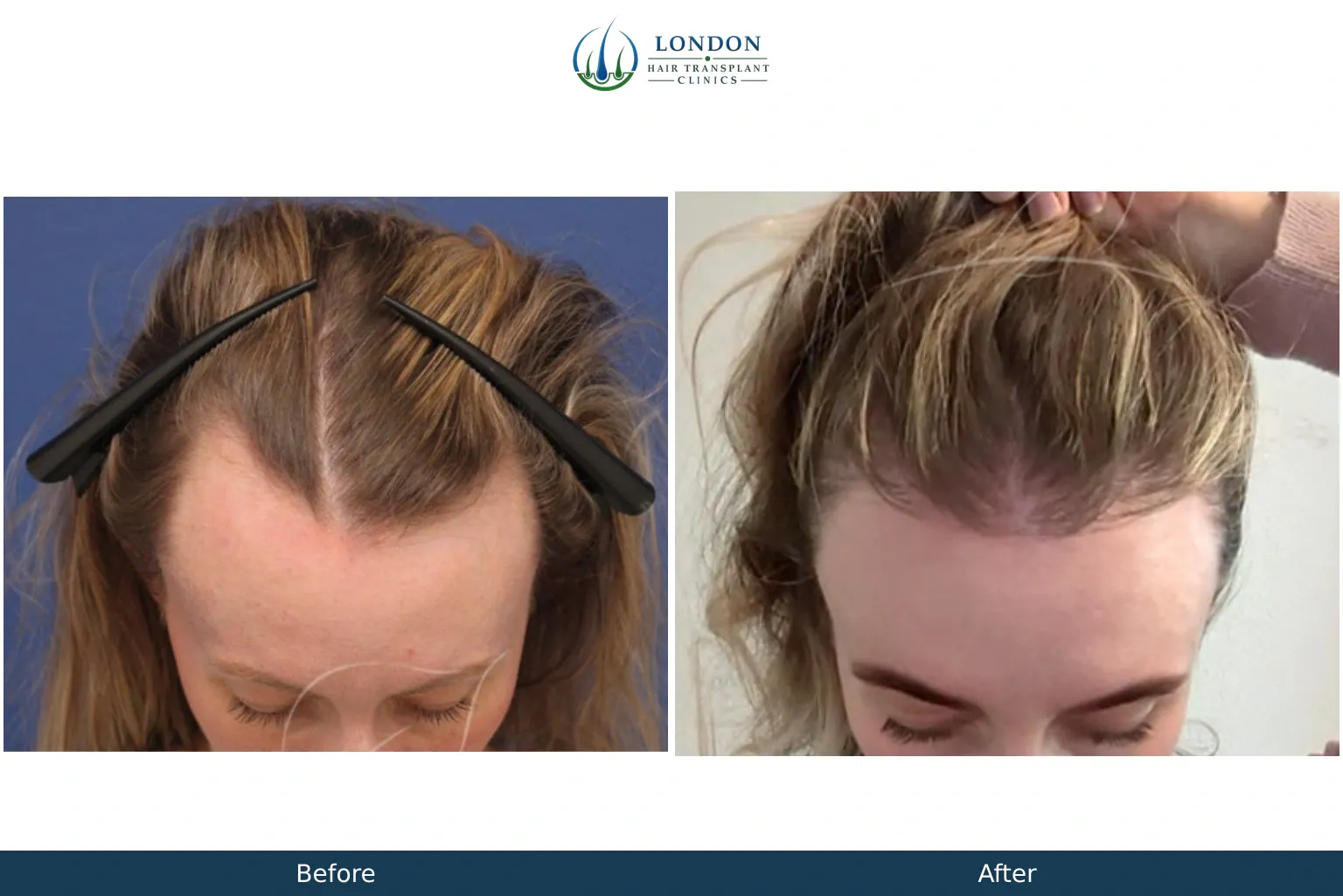
Amina’s Results
- Timeframe
- Around 12 months
- Grafts
- 1,535
- Method
- Follicular unit extraction (FUE)
- Area
- Receding hairline
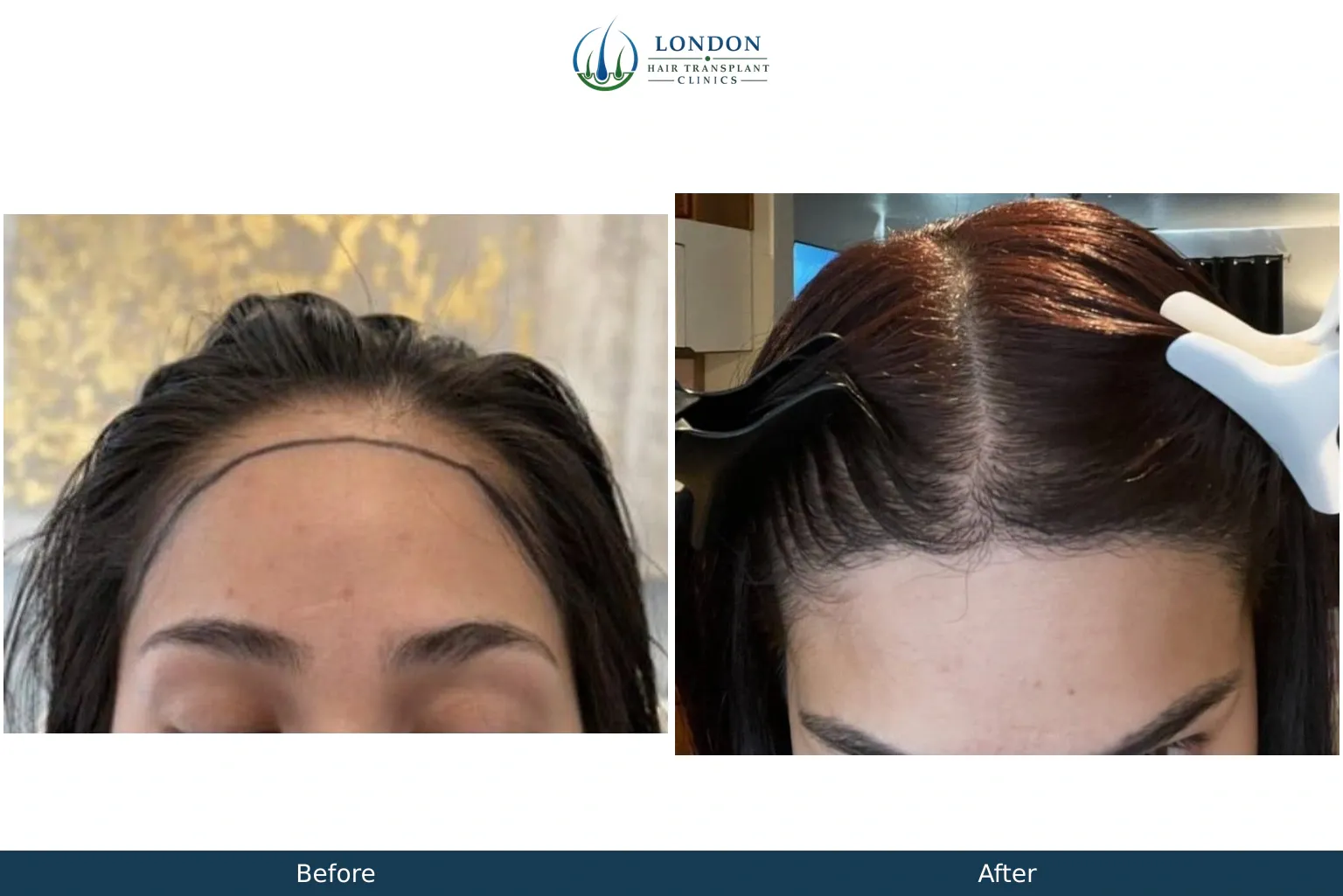
Amenia’s Results
- Timeframe
- Around 12 months
- Grafts
- 2,136
- Method
- Follicular unit extraction (FUE)
- Area
- Hairline & temples
A widening parting, thinning temples or sudden shedding
A wider parting often shows up first when a strip of scalp catches the light. Female pattern hair loss commonly affects the top of the scalp, and the front edge may be relatively well preserved. Tight hairstyles can cause loss where the hair is repeatedly pulled. Widespread shedding after illness or childbirth can have a different course again. The timescale and distribution are as important as the amount coming out in the brush.
A clinician may suggest examining the scalp or investigating another cause before referring you for surgery. A transplant has little to offer if the gap is likely to fill as shedding settles. The British Association of Dermatologists’ guide to female pattern hair loss explains its usual pattern and treatment options.
A transplant along the parting or the hairline
For a parting, the aim might be less scalp showing in one particular hairstyle. Widening that treatment area spreads the available grafts more thinly. Show the surgeon where you normally part your hair and whether you swap sides. They need to assess the hairs still growing there and how much room there is to place grafts between them.
At the front, the plan may involve filling a temple or adding hair in front of a naturally high hairline. Recession caused by an active scalp condition needs a different plan. Hairline advancement is another operation that physically moves hair-bearing scalp forwards. If forehead height is your main concern, ask which procedures are suitable and where each would leave a scar.
Shaving, donor hair and the day of surgery
With FUE, grafts are taken individually from the donor area. Ask the surgeon to show you the extent of the proposed trim or shave with your hair pinned up. A small area may be covered by longer hair above it. Whether that is feasible depends on the number of grafts and the distribution of donor hair. The phrase ‘unshaven transplant’ on a website does not tell you what would be trimmed in your case.
On the day, check the marked area with the surgeon before the local anaesthetic. The donor follicles are removed, prepared and placed into small openings in the treatment area. Your written plan should say who carries out the surgical steps and who will review both areas afterwards.
Healing, growth and costs
You may want time away from work while the donor area is visible and the grafts need protection. Before going home, ask when you can resume washing, wearing your usual parting and tying your hair back. Explain if work requires a tight cap or helmet. Ask when it is safe to colour your hair again. Your surgeon’s timing will depend on how the skin is healing.
Early shedding can make the parting look little changed at first. Growth is gradual over the following months, and a mature result can take more than a year. Photographs with the same parting, lighting and hair length are more useful than comparing one picture of wet hair with one of dry hair. The London price list gives the fixed scalp packages. Your quotation should specify which area and graft count it covers.
Questions about surgery for women
What if the hair at the back is thinning too?
Follicles taken from a thinning area may provide poor long-term cover. Removing them can also make that area more visible. An examination of the back and sides can change the decision to operate, even when the parting is the only area that worries you.
Could I have treatment without surgery?
Depending on the diagnosis, options can include treating the cause of shedding, changing a hairstyle that pulls or discussing a medical treatment with a clinician. If you are pregnant, breastfeeding or planning a pregnancy, tell the clinician before starting any treatment for hair loss.
Will one operation restore my teenage density?
A transplant redistributes a limited supply. An achievable goal might be better coverage along your usual parting with your hair dry. Ask what is likely to remain visible under bright overhead light and what would happen if the surrounding hair continued to thin.
Our Surgeons
Our surgeon is:
- Dr Harpreet Kalra – Principal Hair Transplant Surgeon – GMC: 7126076