Before and after a hair transplant: a practical checklist
What to discuss with the clinic, how to prepare and which recovery questions need personal advice.

On this page
Before a hair transplant, get a written plan for the operation and your recovery. After it, follow the instructions from the team that treated you. Generic online schedules cannot account for your medicines, procedure, healing or work.
Before you agree to surgery
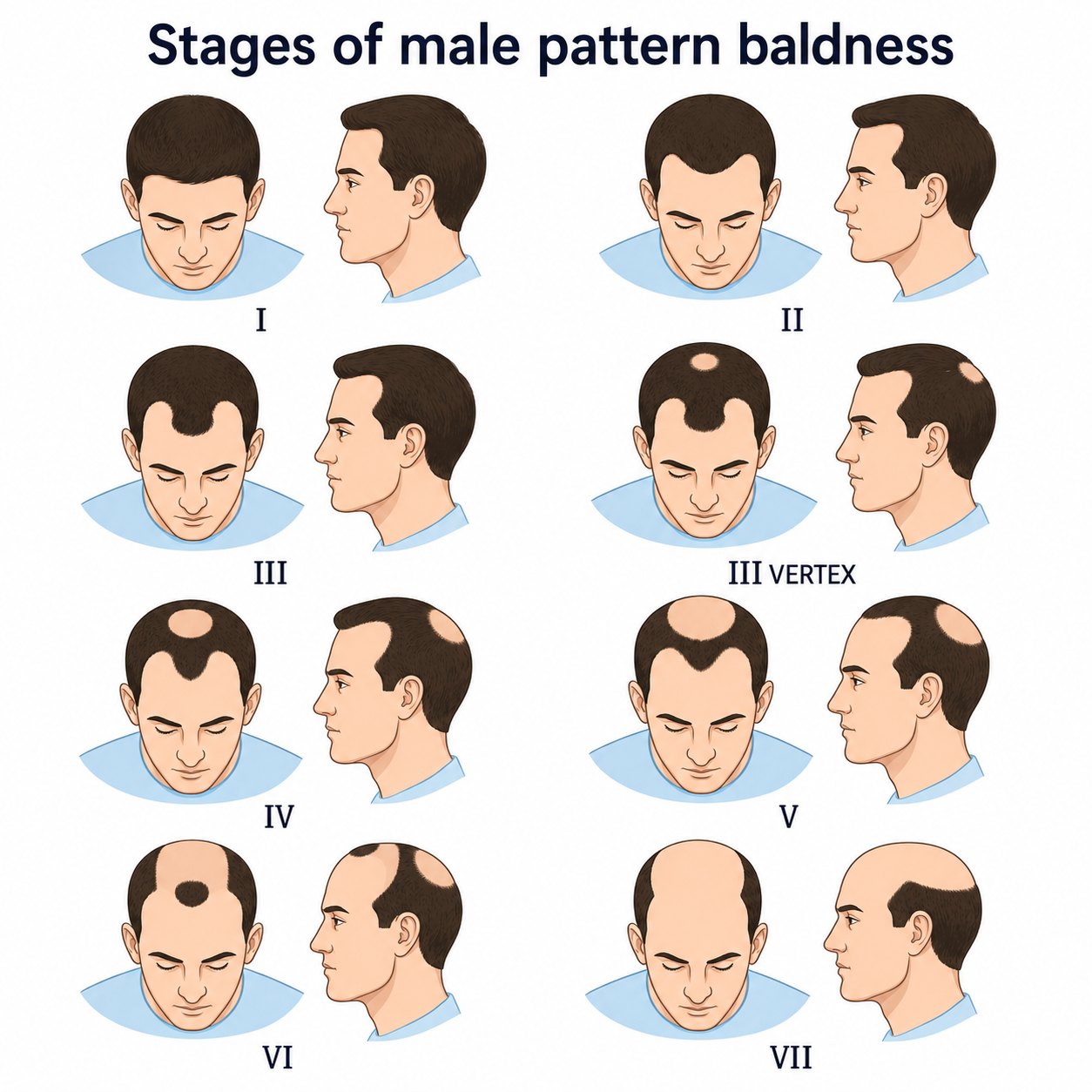
Make sure the consultation explains the cause of your hair loss, the areas to be treated and the limits of your donor supply. Ask who will perform each surgical stage, what alternatives are available and how continuing hair loss could affect the result.
The consent discussion should cover scarring, infection, bleeding, changes in sensation, poor growth and the possibility of an unsatisfactory cosmetic result. Request a written price and clarify what follow-up and additional treatment would cost.
Use our clinic research checklist to check the doctor and treatment location. You should have time to consider the plan and ask questions before paying or committing.
Medicines, supplements and medical history
Give the clinic a complete list of prescriptions, over-the-counter medicines and supplements. Mention allergies, previous reactions to anaesthetic, bleeding problems and relevant medical conditions. Include topical hair products and any medicines taken for hair loss.
Do not stop prescribed aspirin, anticoagulants or other treatment because a general article says to. Changes may need agreement between the surgeon and the clinician who prescribed them. Ask for clear written instructions about any change and when treatment should resume.
Vitamins, antibiotics, PRP, minoxidil and finasteride are not universal requirements. Each needs a reason and, where relevant, discussion of risks and contraindications. Buying extra products does not guarantee better growth.
Practical arrangements for the day
- Confirm the time, location, expected duration and an out-of-hours contact number.
- Ask whether you should eat and drink normally and follow the specific instructions given.
- Check what clothing and headwear are suitable without rubbing the treated scalp.
- Discuss transport, sedation and whether you need someone to accompany you.
- Plan work and childcare around the recovery advice for your circumstances.
Driving advice depends on medicines, sedation, your condition and the treating team's instructions. Do not assume that local anaesthetic alone makes driving home appropriate.
Caring for the scalp afterwards
Ask the team to demonstrate how to wash your scalp and tell you when to start. Check the instructions for both the donor and treated areas, including which products to use and what to do about crusting. Avoid picking or scratching while they heal.
Obtain individual advice about exercise, swimming, helmets, hats, sun exposure, haircuts and colouring. These activities put different demands on the scalp; a single “back to normal” date may be unhelpful. Our first haircut guide explains what to ask your barber and clinic.
Attend the planned reviews even if healing seems straightforward. Photographs taken in consistent light can help the team follow progress, but they cannot replace an examination when one is needed.
When to contact the clinic
Report increasing pain, spreading redness, discharge, persistent bleeding or symptoms that differ from the instructions you were given. Seek urgent medical help for severe or rapidly worsening symptoms. Do not wait for a routine growth review if you are concerned about a complication.
The NHS hair transplant guide provides general recovery information. Your clinic should explain how that guidance applies to your operation and give you a clear way to obtain help.
Questions and answers
Should I stop all supplements before surgery?
Tell the surgical team exactly what you take. Follow its individual advice; supplements vary in their ingredients and effects.
Does everyone need antibiotics after a transplant?
No universal course should be assumed. Take them only if prescribed for you and follow the prescriber's instructions.
Is shedding after surgery proof that the transplant has failed?
No. Transplanted hairs can shed as the follicles cycle, but concerns about healing or growth should be assessed by your treating team.